

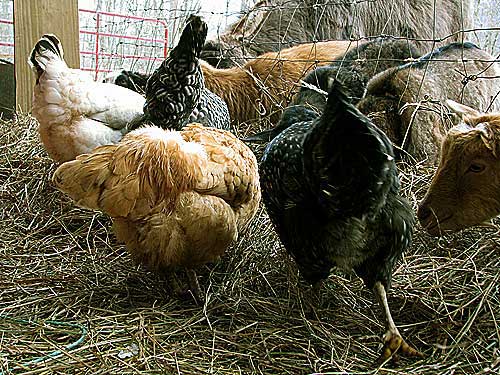
Chickens are busy creatures, always at work, scratching and pecking for food, grooming themselves, laying, and setting. There’s never a dull moment if you’re a chicken. They’re never bored and they never get tired of being a chicken. They go to bed early and they’re up at the crack of dawn–ready to work all day on their busy little chicken business.
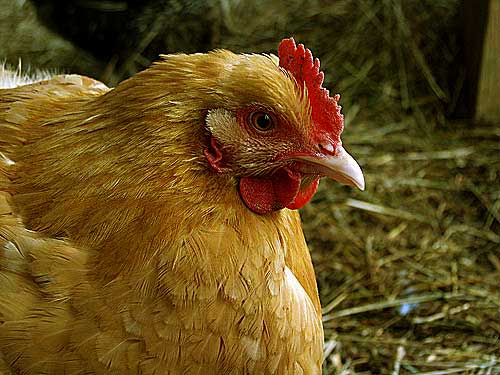
Chickens have a lot of personality. They’re cheerful little bees, too. Friendly, interested in people, and encouraging of one another. You should hear the ruckus when the hens are laying. One hen lays while the others join in a chorus of clucking. They are so happy for each other! They have a sense of humor, too, shown in the way they hide their eggs, and change hiding places regularly. They think they are so funny. And they know I’m way too lazy to track after them in the snow when I hear them clucking.
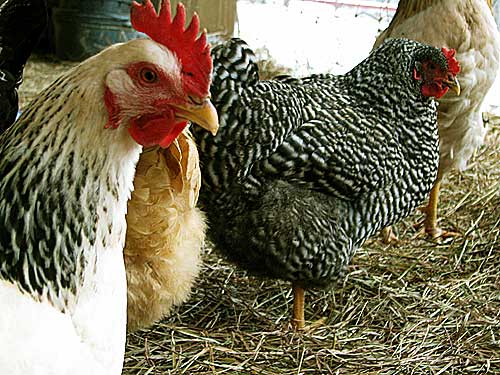
They’re the easiest anmals on the farm to tend–they mostly tend themselves, especially if they’re free-rangers. I get a lot of quesions about chickens and a number of people have emailed me specifically requesting a post about keeping chickens for the novice. Granted, having kept chickens for just shy of two years myself, I’m little beyond novice status myself, but hey, that just means I understand. Anything can seem mysterious–until you do it. In a very short time I’ve gone from–wow, like, is that a REAL CHICKEN (?!) as if they were some sort of magical storybook creature only to be found in Little Golden Books to not being able to imagine my life without chickens in it ever again.
In a growing number of urban and suburban areas today, keeping chickens is becoming more common, so this isn’t just for country living. You don’t need much space to keep a few hens. Many municipalities are changing laws to allow keeping chickens, perhaps because the economy has forced a turn back to more self-sustainable practices, or perhaps due to the general increasing popularity of simple living. The more sophisticated the world becomes, the more we long for something to ground us.
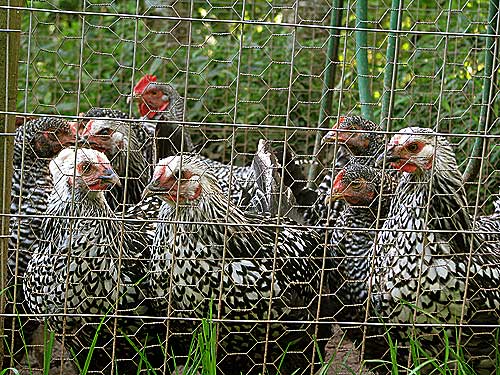
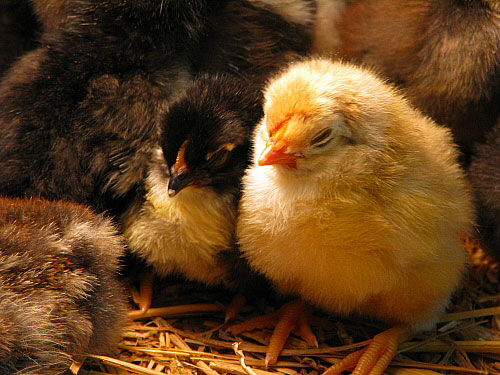
Chickens are grounding. There is something very soothing about a chicken. And it’s nearly spring–and spring means baby chicks. If you’re going to start keeping chickens this year, the time is drawing nigh!
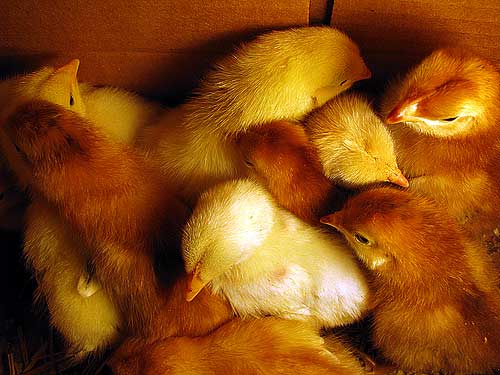
You can start either by incubating some eggs yourself–if you have a chicken-keeping friend who will give you some (and you can even order eggs to incubate) or by buying chicks from a feedstore. I do both. I have a Little Giant still-air incubator. I like it. It’s easy to operate and very simple. It doesn’t do anything fancy like turn the eggs, but I don’t mind. The benefit of getting chicks from the feedstore is that you can buy them sexed and know what you’re getting. If you live in town, this is important in order to avoid roosters. (Not that there isn’t the occasional mistake in a batch of supposed hens…. Good luck!)
Once you have your babies, you’ll need a simple brooder box to keep them in until they’re big enough for the chicken house. A brooder box can be easily constructed out of a few pieces of wood, somewhat like a garden planter, with chicken wire tacked down across the top (with a removable end so you can get in there to change out feed and water etc). You can get little waterers and feeders made for chickens from a feedstore or large pet supply store. They should be able to walk without slipping–this is important–so keep something sturdy under their feet in the box (such as wood shavings or straw). Chicks need to stay warm–get a light. You can buy special lights for this purpose, or use a 25-watt bulb and rig it over the brooder box.
When your chicks have outgrown the brooder box and are starting to grow feathers (after several weeks), it’s time to move them to the chicken house. (If it’s not too cold where you are, you can even keep the brooder box in the chicken house.) There are as many different ways to build a chicken house as there are chicken keepers. Our chicken house is a simple construction using reclaimed wood with a metal roof. There’s a people-size door on the outside and a chicken-size door to the yard, which is fenced and covered on top, too. (You can see more about how we built our chicken house here and here.) Some people use chicken tractors, which are large box-like chicken houses that can be moved around to fresh grass. Other people build veritable chicken palaces. We pretty much have a chicken shack. Just remember, the chickens don’t really care.
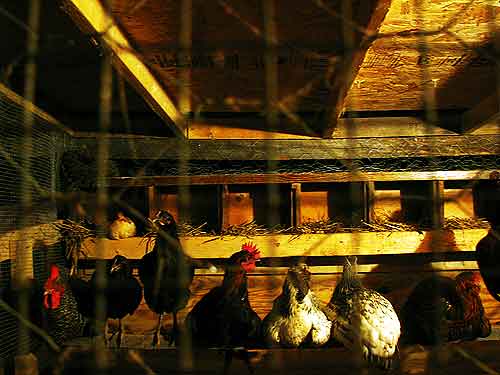
They’re frugal little things. Give them a sturdy, safe house with a roost, a light at night, plenty of food and water–and they’ll be tickled pink. (Put “chicken house plans” in a search engine and you’ll come up with plenty of options. Or just make up your own–that’s what we did.)
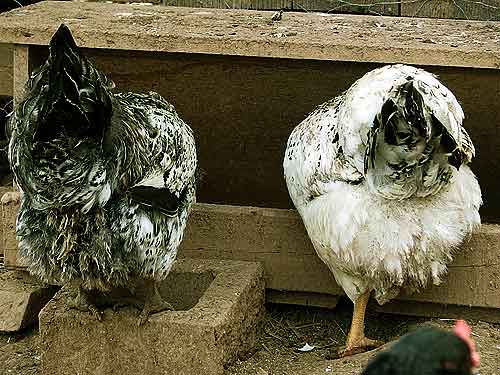
Don’t expect eggs right away. Most hens will start laying when they are 5-7 months old, some take even longer. If you want pretty green and blue eggs, get Easter-Eggers (Ameraucanas or Araucanas). Some breeds are more dependable layers than other breeds. Rhode Island Reds are very popular egg-producers. I have a little of everything, some purebred, some Easter-Eggers, some good layers, some not-so-good layers, some mixed breeds (which is what happens when you incubate from a mixed flock). I love my mixed breed chickens–each one is beautifully unique. But I appreciate the pure breeds as well.
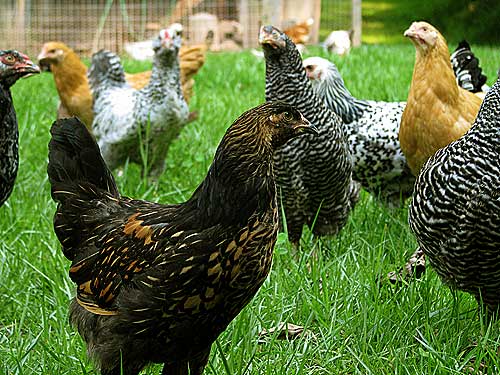
On a daily basis, chickens need food and water. Occasionally they need their house cleaned out and fresh straw put down. That’s about it! They’re generally healthy and simple to tend. If you have a place to allow them to free-range, they’re even simpler to tend and they forage for their own food. (Be careful about free-ranging in your backyard if you live in town–remember that chickens CAN and DO fly. They could easily fly over a backyard fence if it’s not high enough. I saw Mean Rooster–a HEAVY bird, fly up ten feet one day trying to get up to the porch just so he could STAB ME IN THE FACE. Oddly, I miss him…..)
Chickens are fascinating, charming, and downright wonderful! I highly recommend them. They’re very easy to keep, so don’t be afraid. There are many, many books, websites, and other resources that provide detailed information. Storey’s Guide to Raising Chickens is a good one. Feel free to ask questions on this post or on the Chickens in the Road forum, too. One of the most-often asked questions I get is: “How do you know if an egg is fertilized or not?”
Answer: If you break an egg over the frying pan and the yolk starts screaming–
I’M JUST KIDDING.
The answer is–you don’t know. If you have at least one rooster with your hens, some of your eggs are going to be fertilized. Not all of them, unless you have really dedicated roosters. I mean, look, those boys have a lot to do between scratching and pecking and chasing the hens around in circles and under and over gates. Those hens don’t give it up easy, you know. The roosters can’t catch them all every day. (That’s one of the reasons you can’t expect all the eggs to hatch when you incubate.) Fertilized or unfertilized, the eggs taste the same. On a side note, a rooster is not necessary in order to get eggs. Your hens will lay with or without a rooster. (And in that case, you will know that they aren’t fertilized if there’s no rooster around!)
So who’s got chickens? Who wants chickens? Or just more chickens? I’m ready for spring chicks already! It’s so hard to wait.
P.S. Dip into the archives–you find all my chicken stories here.


wheezay says:
Chicks are so darn cute I can’t stand it ! :snoopy:
On February 19, 2010 at 1:46 am
Nic, SD says:
Great post! I want chickens SO BAD. When I was still living at home, my Mum fell in love with the idea for a little bit after reading about them in an issue of Organic Gardening. She got my hopes all up and then never did anything with it!!! (To be fair, keeping farm animals isn’t legal in the city she’s in.) Ever since moving out, I’ve been in apartments, but ONE DAY it will happen…
(By the bye, if anyone has any good suggestions of ways to convince my urban loving husband to buy a house somewhere chicken appropriate, I’m all ears!!)
On February 19, 2010 at 2:15 am
Patty says:
I can’t have them where I live either, but SOMEDAY!! They’re so cute. We had them when I was a kid, and I always loved them. I’m so glad we get to see yours 🙂
On February 19, 2010 at 3:28 am
ClassyChassy says:
Love your chicken photos! I’m happy my hubby finally accepted the idea of keeping hens. He wasn’t too keen on it at first, but soon he was watching their antics with interest, and even began building a coop for me to keep them in when they grew too large for the make-shift brooder I put together…and then, he had so much fun building that coop, he started taking orders for more of them! He sells them for less than some catalogs do, and they’re just as cozy and cute! The orders are beginning to roll in now – spring will be here before you know it!
On February 19, 2010 at 4:53 am
stacy says:
I have chickens and I love every one of them!!! Thankfully there are only nine to love!! I get more than enough eggs for my family and they eat just enough food to warrant a trip to the feed store once a month.
On February 19, 2010 at 6:33 am
Johanna says:
I love my flock, and yours too! It’s truly “Farmer TV” when you had chickens to watch. I agree with all your sentiments. Recently I discovered my hens were pecking one of my Buff Orpingtons. She probably got knicked when one of the roosters mounted her and had a spot of blood which attracted them. I felt so bad for her. She’s in isolation now, healing. It’s my most recent blog post over at https://www.busysolitudefarm.com.
Got to say I’m a little bit lusting after some of your girls! I don’t have any white ones with black edges on their feathers…Gorgeous!
On February 19, 2010 at 6:51 am
Glenie says:
I love chickens and will be getting more babies today or tomorrow. The grandkids are going to get some of the babies and start their own flock.
On February 19, 2010 at 7:21 am
carsek says:
I have a few chickens to, you just can’t beat farm fresh eggs!! So much better than the runny store eggs. I agree, chickens are about the easiest keepers out there for farm critters. And they are really fun to watch. Yours is a really healthy looking flock!!
On February 19, 2010 at 7:24 am
CindyP says:
I want my own fluffy butts!! Things didn’t go together as planned last years, and by the time the coop and run were all done, it was almost winter……..so I’m waiting until this year!! I’m getting little chicks to start here shortly!! And I have you to thank! I wasn’t interested in chickens, or fresh eggs until I found Chickens in the Road or the forum :heart:
On February 19, 2010 at 7:34 am
Tabitha says:
i LOVE my chickens!
we finally got them last year and they have been more enjoyable than i ever imagined
i could sit and watch them for hours…and they are so soft (who knew chickens were so soft and fun to pet?)
we have a variety also….i’m trying to justify getting more this year….those little baby chicks can make your heart melt!
On February 19, 2010 at 7:40 am
Chic says:
:chicken: Good Morning Suzanne! We’ve already got our order in for more chicks for March and it’s going to be a learning experience to deal with over 60 chicks at one time! We’ve had as many as 6 chicks at once and that was easy so this shouldn’t be too bad. Some we’re getting for meat but the rest will be for eggs. I feel the same as you…couldn’t live without chickens in my life..they are such a joy to have around and always seem to make me laugh. I love to just sit in the yard (in the good weather!) and watch them hunt and peck. We have the best rooster…he takes such good care of the girls and he’s such a handsome devil…doesn’t have an aggressive bone in his body. I love my chickens! ps…that’s his picture by my post. Hope you have a wonderful day! :hungry2:
On February 19, 2010 at 7:51 am
Susan at Charm of the Carolines says:
I LOVE chickens and can’t wait to have some. I’ve heard it’s against the law to have them in my neighborhood, but if I only have 2 and no rooster, who would know? Besides they are pets, right? I’m just afraid of what might get ahold of them. Not necessarily my dogs or cats, but a stray possum or coon. I even worry about the coyotes. Right now all my furbabies sleep in the bedroom with me at night. Not sure there is room for 2 chickens in the bed.
Susan
On February 19, 2010 at 7:54 am
wkf says:
You can order chicks on- line too. Cackle hatchery is a reliable one. Chicks come in the mail and you have to pick them up at the post office. They do small orders too. Have you seen these little coops at eggcartons.com they made me giggle? They are expensive. but neally a neet idea for backyarders.
https://www.eggcartons.com/product-exec/product_id/882/nm/The_Eglu_Chicken_Coop_EGLU
On February 19, 2010 at 8:20 am
Hannah says:
I want chickens! But they don’t allow them in our area. 😥
On February 19, 2010 at 8:23 am
beartwork says:
I have chickens too, 3 Rhode Island Reds and 4 Delawares..and getting more this spring…We get just enough eggs within the week to feed our family and my favorite is our big Rhode Island Red Rooster, Roo-Roo….he’s the sweetest thing, when it was warmer, (he hates snow) he would come to the back door and cockle doodle doo, he would come in if I let him,(sounds like Crooked Little Hen).. I never thought I would become attached to a rooster, but there’s just something about a fluffy butt..did I just say that?
On February 19, 2010 at 8:23 am
wkf says:
Oh and Strombergs has small brooder kits that look like they are made out of a covered litter box….actually a lot of the hatcheries have these kits. Looks like it could easily be made….
:chicken:”s make me act like this :snoopy: !!
On February 19, 2010 at 8:26 am
SarahGrace says:
We got twelve pullets in the fall. Unfortunately, we lost 3 including our favorite– Lil Red. We think it was a bad bag of feed. We have a wonderful neighbor who came, advised, and helped us. We, like you, are ready for some more. We love the Fluffy Butts. They make us smile each and every day.
On February 19, 2010 at 8:41 am
Angie says:
:chicken: I have a hen sitting on a nest of 6 eggs right now. It’s still too cold, in my opinion, but she was adamant. I love, love, love fuzzy-butt chicks! Should hatch next Tuesday if they’re going to… can’t wait!
On February 19, 2010 at 9:00 am
Cathy says:
I purchased 11 “throw away” chicks when my husband was out of town2 years ago. Now, I can’t get him to stop buying and incubating eggs. He is smitten by them. We have Rhode Island Reds, White Leghorns, Sicilian Buttercups, Japanese Silkies, a variety of bantams and my mixed lot of exotic and mixed breeds. We love our fresh eggs and just hearing them in the morning when we go out to feed.
On February 19, 2010 at 9:11 am
Joy says:
My Atwood’s farm store ad this week had baby chicks, ducks and geese on sale. Oh how I would love to have a little flock, but alas I can’t so I depend on your posts to soothe my ravaged soul…have a great weekend and tell the girls in the henhouse I love them!
On February 19, 2010 at 9:16 am
Elaine says:
I tried to incubate chicks late last month. I only have one healthy chick. https://www.heavenscentfarms.com/the-chicks/ I could not get my humidity right. Please tell me your secret. I am a little leery of trying again. It is so sad when they are not healthy or don’t come out of the shell. Tips on the incubator please!
On February 19, 2010 at 9:17 am
Suzanne McMinn says:
Elaine, you can get a little gadget that measures the humidity inside your incubator. That said, I don’t have one. I just keep the little trays of water full!
On February 19, 2010 at 10:36 am
Nikki says:
I have four chooks, given to me a few months ago by a neighbor who had more than he needed, (can you imagine?). Now they eat from my hand, allow petting, follow me around and coo me love songs whenever they see me. I can’t imagine being without them either, and yes, my husband is slowly succumbing too. The yummy eggs help!
I re-purposed a wooden dog house, and mounted it on a garden cart so it’s ultra easy to move around. They lay their eggs in a flat back bucket laid on it’s side, and all four are happy to take turns in it, or squash in together like preteens having a sleepover. The girls have a covered pen that I can move on two wheels like a wheelbarrow, and they are happy to stay inside that when I’m away, but they free range when I’m home.
It’s going to be soooo hard to resist those chicks at the feed store this year. I keep thinking how nice it would be to have a couple of buff orps to go with my easter-eggers and barred rock.
On February 19, 2010 at 9:36 am
C Aultman says:
I really want chickens too and thinking hubby might be getting more receptive to the idea.
His concern is that with all feed we would buy, we would really hate to see this costing us more than store bought eggs.
On February 19, 2010 at 9:39 am
WatkinsGal says:
I have a “chicken shack” with eleven laying hens and two roosters. I’ve bought baby chicks via mail order and from the feed store. Most mail order requires a minimum order of 25 chicks…so they stay warm enough via transport. We have a predator problem or raccoons, coyotes and foxes, and I’ve lost several birds this last year to these varmints. A baby chick order was in my near future until a friend of a friend wanted to get rid of some of her 50 plus laying hens. Lucky me.
A rubbermaid type container makes for a cheap and easy brooder!
On February 19, 2010 at 9:48 am
jan-n-tn says:
Remember the chicken with the crazy neck feathers….
what did it turn out to look like, at maturity?
On February 19, 2010 at 9:51 am
PetalzAndFinz says:
We love collecting our fresh eggs. I love the variations in color and size and shape.
You can actually check to see if your eggs are getting fertilized. When you crack them open, there is a white spot on the yolk. If it looks like a bullseye, it is fertilized. If it is more solid, it’s not fertilized. After “exposure” to a rooster, a chicken can also lay fertilized eggs for about a week or so without another conjugal visit. There’s some pictures of fertilized vs. unfertilized eggs here: How to tell if your Chicken Eggs are Fertile.
~Jenny~
On February 19, 2010 at 9:53 am
Annie says:
I think once you’ve had chickens, you always want MORE chickens. I love my chickens.
On February 19, 2010 at 9:54 am
Nancy says:
Just a quick note about a light at night; chickens need 16 hrs of light to produce eggs so I set up a timer in the barn to come on at dusk and go off to whatever time of year it is and how much naural ight there is to provide the 16 hrs. They don’t need light past that. :chicken:
On February 19, 2010 at 10:10 am
Phyllis Ryan says:
When I was little my father brought home 6 chicks for Easter. Since my cat refused to play “house” my friends and I would dress the checkens in doll clothes and push them in the buggy up and down the street. Those poor chickens.
On February 19, 2010 at 10:14 am
Lola-Dawn says:
OH YEAH … SPRING PEEPERS!!! :happyfeet: Oh wait … that was a previous life … before I lived in a city apartment. Still miss my chickens, especially in the spring! 😥
On February 19, 2010 at 10:38 am
Mary from Baton Rouge says:
I love my chickens too! We have 10 Araucanas, and 19 older birds that include Silver Lacewings, Rhode Island Reds, as well as, Yellow and Black Sexlinks. The older birds do not produce much anymore, but I just can’t bring myself to “harvest” them. They are truly a joy to watch. I can’t wait till spring so that we can get more chicks!
On February 19, 2010 at 11:11 am
Jen R (emeraldsunshine.org) says:
I want chickens really bad, but my town still doesn’t allow them. SAD!
On February 19, 2010 at 11:11 am
Cousin Sheryl says:
To C. Aultman (above):
My son had some chickens for a 4-H project a few years ago and as part of his project he did a cost analysis of store-bought versus home grown eggs. Essentially, after you initial expenses of birds, shelter and hardware (feeders, waterers, etc.), home grown eggs are CHEAPER than store-bought. This is especially if you free range (lower feed costs) and if your chickens with a rooster hatch out their own replacement hens.
Hope you start keeping chickens! They are fun!
:chicken:
On February 19, 2010 at 11:25 am
Shirley Corwin says:
I am so intrigued by the thought of having chickens. I live on 1 sq. acre in a farming township but I’m surrounded by a golf course. I am pretty sure I am able to have chickens here. I mean, people around here with more land have horses. Now I just would have to find someone to help me build a coop! This might be my next big adventure!
On February 19, 2010 at 12:26 pm
Mz E says:
I hope you get some Silkies this spring – they are the ultimate fluffy butts!!
On February 19, 2010 at 12:35 pm
Daria says:
I’m hoping my town decides in favor of small chicken flocks this spring – we’ve wanted them for while. Luckily I work with a bunch of farm folks, and they bring in eggs for sale cheap, $2 a dozen. Can’t complain about that! But I think it would be neat to have my own flock of 4-6 birds.
On February 19, 2010 at 12:44 pm
Marymac says:
I’ve spoiled my chickens and my chickens hAVE SPOILED ME, LOL. I hate it when they don’t lay well like during the winter. I don’t put a light on them so they can have their rest, but then I have to buy eggs and if they are store bought, YUCK. Thus they have spoiled me. Also I love chicken TV.
On February 19, 2010 at 1:23 pm
Julie says:
I love my chickens! I love all of the fresh eggs that I get. My sisters in the city won’t eat my fresh eggs because “they come from a chicken’s butt”…but where do those eggs from the grocery store come from?
On February 19, 2010 at 1:42 pm
Crystal says:
What a timely post! I’ve been talking recently about wanting chickens. Some people I talk to make it sound like a breeze, and other things I read make it sound sooooo overwhelming and scary! I can’t wait till I have a few minutes to come back to this post and give it a good read through.
On February 19, 2010 at 2:14 pm
Johanna says:
We are all so enthusiastic about our chickens! It just makes me smile. Cheered me up after a tense day at work. Thanks!
On February 19, 2010 at 5:40 pm
Martina says:
Great pictures. I Love your perspective in the photos. I wish I could send you a pic of “John the Baptist” our Buff Orpington rooster. We have 25 chickens right now……….free range as well.
Love your site
On February 19, 2010 at 6:25 pm
Sheryl - Runningtrails says:
I have chickens and want more! I love my girls and they are, indeed, so rewarding and easy to keep!
On February 19, 2010 at 6:25 pm
NorthCountryGirl says:
I’m so glad I got my chickens!
On February 19, 2010 at 7:46 pm
SuzzyQ says:
Julie, have you asked your sisters where in the world do they think their chicken eggs come from? That’s hilarious!
I would absolutely love to have chickens but my husband remembers the stinky mess they made at his grandparent’s farm and doesn’t want anything to do with raising them. I’m sad…….
On February 19, 2010 at 8:57 pm
Shell says:
We love our chickens. Our flock ranges from 50-15 at any given time of the year. We currently have pure Buff Orpingtons, Black Ameraucanas and 1 Easter Egger. I’ll be adding some Cochins and Wyandottes this year.
It’s actually fairly easy to tell if your eggs are fertile to hatch. Here’s a snapshot from one of our eggs last year. The small almost transparent white dot (not the window reflection lol) says it’s fertile. https://www.flickr.com/photos/24714553@N04/3255774807/
On February 19, 2010 at 10:22 pm
lavenderblue says:
I was checking the back of the feed store the other day to see if the baby chicks were in yet. I can’t have any but I love to go look at them when they come in. They weren’t there yet, sad to say, but I guess it’s just as well because I’m sure it is too cold for them.
And could somebody tell me what ‘sexlinked’ means? I don’t want to sound stupid but, on the other hand, you have to admit the phrase is intriguing.
On February 19, 2010 at 11:41 pm
Suzanne McMinn says:
lavenderblue–sex linked means you can tell the sex of the chick at birth, usually by the color.
On February 20, 2010 at 7:27 am
Karen L says:
Yep. I’ve got chickens too – 16 to be exact (some easter-eggers, and some brown egg layers too). We just ordered more baby chicks (mypetchicken.com will ship as low as 3 chicks but it depends on how close you live to a city). They really are low maintenance and the chicken poop is great for the garden. I can’t believe there are towns that do not allow chickens – roosters maybe because they crow ALL day long, and I mean ALL day long. Glad we don’t live in those places.
On February 19, 2010 at 11:43 pm
KentuckyFarmGirl says:
I love my chickens! I have a Rhode Island Red Rooster and a Buff Orpington Rooster. 21 mix-and-match hens 🙂 2 Ameracauna hens and an Ameracauna rooster. I was a little disappointed that one of them turned out to be a rooster because I thought I got 3 hens but in the end I’m excited because I can raise some full-blooded chicks. BTW, I finally got that first blue egg! I also have a Cochin Bantum family consisting of a Roo, hen and their baby pullet Boo. I did a post on my blog about the three of them last week.
I sell my eggs and one thing I do that wasn’t mentioned is that I keep a large bowl of oyster shells out for my hens to scratch and eat. It makes the shells harder/less brittle.
Love your Keeping Chickens post and love the new format and more posts per day!
On February 20, 2010 at 8:49 am
Sasha says:
I’m looking forward to reading a post about how you fixed the crooked little hen’s beak and saved her life :snoopy: :snoopy:
On February 20, 2010 at 10:30 am
BuckeyeGirl says:
Sasha, CLH sure looks happy and healthy to me! If she were at a commercial farm she wouldn’t have made it past the first week of her life, but she is surely one happy hen there on Suzanne’s porch! I suspect her life has already been saved crooked beak or not, and that she’s happier now than she’d be with the trauma of some unnecessary medical procedure.
On February 20, 2010 at 10:49 am
Darlene in North Georgia says:
Uhmmm…The first time I bought chicks, I was too poor to afford a “brooder”. so I simply put them in a large cardboard box with newspaper on the bottom. Then I put one of my living room lamps with a 60 watt bulb in in across the box, so the lamp was suspended on it’s side. I actually cut out a spot for the lower side of the lamp to lodge at the top of the box and then used the little screw part of the lamp to punch a hole into the side of the box. Used the nut part (that holds the lampshade on) on the outside of the box, so that the lamp was secured to the inside of the box. I then covered the box with a towel. About an our later, I heard them cheeping and went to see what was wrong. They were all huddled under the lamp and protesting, so I lowered the peg end of the lamp a bit, punched another hole in the box and re-screwed on the nut. After a few minutes they quieted down, so I knew they were happy.
I changed the paper everyday, shredding some into strips. (use the paper in your compost pile or around corn. DO NOT use it straight in the garden because the high nitrogen will burn almost anything but corn – it loves nitrogen).
After a a week or so, I heard them cheeping like crazy again. I went to check on them and they were all pushed into the corners of the box. They were too warm, so I just raised the lamp up a bit and in a few minutes they were happy. Each week or so, simply raise the peg side of the lamp higher, punch another hole in the box and re-screw on the nut. When they have feathers, you can turn off the lamp.
So, until they were ready to live outside, they just sat on my kitchen floor in the box. That’s how I did my brooder.
hth
On February 20, 2010 at 4:34 pm
Jenny S. says:
“The more sophisticated the world becomes, the more we long for something to ground us.” – What a wonderful observation. I told my husband that this sentence summed up the reason I’ve been pining away for chickens, bees, goats, a garden, and well…yes, probably cows and ducks, too. I never actually lived on a farm, but spent a lot of time on my grandparents’ farms as a child and you learn so much more than you realized at the time. Time on a farm helps to bring perspective to your life, shows you what you can accomplish with hard work and creativity, and can connect you to memories of loved ones long gone. This was a lovely post and I enjoyed it very much. Your chickens are beautiful by the way :). Thank you Suzanne!
On February 20, 2010 at 7:08 pm
Cynthia Stinson says:
I love chickens. I have wanted them for many years. As a military wife, I move around alot though. When we were at Fort Leonard Wood in Mo. I would take the kids down to Orschelins every spring and go pet the new chicks and ducklings. It was food for my soul. When I go home there (Mo), and build our house when my husband retires,(we have a little land waiting for us)I plan to get easter egg chickens and silkies. For now, I am in South Korea buying chicken socks. There is a guy down the road who has chickens though and I hear his rooster crow all the time. I’m wondering if I can keep a couple in my small backyard, but the flying thing has me a little spooked. For now your blog fills in the longing in my heart.
On February 20, 2010 at 9:08 pm
Kim says:
Another excellent post – I enjoyed the read!
We have far too many chickens of all shapes, breeds, and sizes. Right now our brooder is full, and the house is filled with mucho peeping!
On February 21, 2010 at 6:30 am
Sasha says:
We need a post on how you took the crooked little hen to the vet and fixed her beak! You can probably trim it yourself with the proper tool, and you can probably get a lesson from somebody who raises parakeets.
On February 22, 2010 at 10:15 am
PWFamily says:
What happens if you incubate an unfertilized egg? How long do you wait before realizing it isn’t fertilized and can you then eat the egg after incubating?
On June 15, 2010 at 5:26 pm
Suzanne McMinn says:
You can candle the egg after a few weeks and try to see if there’s a chick growing inside, but this isn’t always easy to do. You can just wait, though–and see if it hatches! Eggs won’t explode in the incubator if they aren’t fertilized–they’ll last at least as long as the ones that hatch. I’ve had eggs that didn’t hatch and I give them an extra day or two in the incubator then toss them. No, you wouldn’t want to eat them after they’ve been heated for any period of time–they would be spoiled for eating.
On June 15, 2010 at 5:33 pm
Linda says:
When you started with chicks, did you have to teach them what to look for when you first started them free ranging, or did they pretty much know what to do?
Thanks for sharing this with us!
On June 22, 2010 at 1:26 pm
Suzanne McMinn says:
Linda, the chickens want to come back to roost somewhere. You can easily train chickens to come back to the house by only feeding them there!
On June 22, 2010 at 6:00 pm