

Stinky cheese! I love stinky cheeses, but I was a little bit (or a lot) intimidated by the idea of making them. The process involves weird ingredients and new (to me) methods. I started this cheese challenge series for New England Cheesemaking to push myself out of my comfort zone, though, and Munster was a big enough threat to make a fine adversary.
Perhaps the “scariest” part of the whole thing is the red bacteria. Brevibacterium linens. WHAT IS THAT?! And you have to brine the cheese. I’ve never made a brined cheese before. It’s also a washed curd cheese–the cheese is “washed” or wiped with salt water during a 10-14 day ripening period before waxing. And you press it under its own weight in a mold sandwich. WHAT IS THAT?! You have to spray the red bacteria on the surface of the cheese with an atomizer. Seriously, I thought finding an atomizer would stop me from making this cheese. I only needed a little atomizer. Not some big spray bottle. Finally it hit me that I could use one of the body spray misting bottles that I ordered to make scented body sprays. They are 8-ounce size with a fine misting pump. (A 4-ounce atomizer would be perfect, if you’re getting one specifically for stinky cheese purposes, by the way.)
Munster cheese is one of a family of cheeses known for their strong smell from the red bacteria. The flavor varies from mild to strong, depending on how long you age the cheese. Other cheeses in this dysfunctional cheese family with odor issues include Brick and Limburger. There is a difference between Munster and Muenster, by the way. Munster is a deli-style cheese while Muenster is a soft and butter-like cheese with a yeasty red rind.
I held a meeting with the staff and told everyone we were going to make stinky monsters.
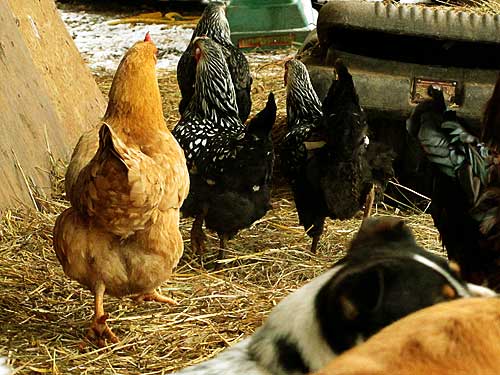
You just can’t get good help anymore.
To get this cheese from starting the milk in the pot to the time you’re finished flipping the mold sandwich and ready to let it sit overnight is 3 1/2 hours. The best time to start this cheese is around 6 or 7 in the evening.
There’s more than one way to make Munster. You can find another method for Munster-making here. The recipe below comes from Ricki Carroll’s Home Cheese Making. (My personal cheesemaking bible!)
Here’s what you need to make Monster Munster cheese:
2 gallons whole milk
1 packet direct-set mesophilic starter
4-8 drops cheese coloring diluted in 1/4 cup water (optional)
1/2 teaspoon liquid rennet diluted in 1/4 cup cool water
2 pounds cheese salt for brine
1 gallon water for brine
1/2 teaspoon Brevibacterium linens diluted in 1/2 cup cool, sterile water
Note: Prepare your red bacteria FIRST, right before you start your milk in the pot. It should be rehydrated at least 10-15 hours before using. Brevibacterium linens is an odor-producing bacteria and is, in fact, the same bacteria that makes your feet stink. Isn’t that weird??? That is red bacteria’s ugly side. Its pretty side is its contribution to the fermentation of cheese. The bacteria comes in a dry powder form. I tried to sterilize an atomizer by dropping it in boiling water but it melted the atomizer. Let that be a lesson to you. I ran the next one through the dishwasher instead. It was from a box of 12 brand new body spray atomizers I had ordered, so it had never been used, but I made my best attempt to further sterilize it. (The atomizer cost $1.05.)
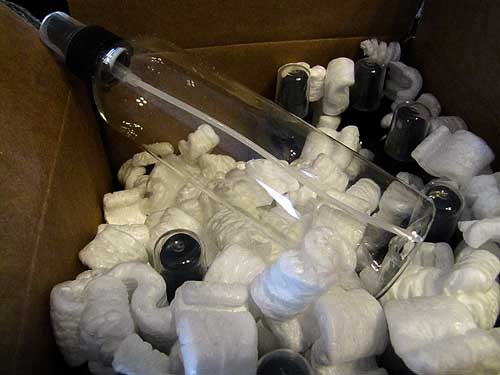
I boiled the water I used to rehydrate the powder, cooling it after boiling then mixing with the powder. I poured it into the atomizer bottle using a small funnel. (I stored the red bacteria in the atomizer bottle in the fridge between uses. One bottle is enough to use for multiple cheeses.)
1. Heat the milk to 90 degrees (88 for goat milk).
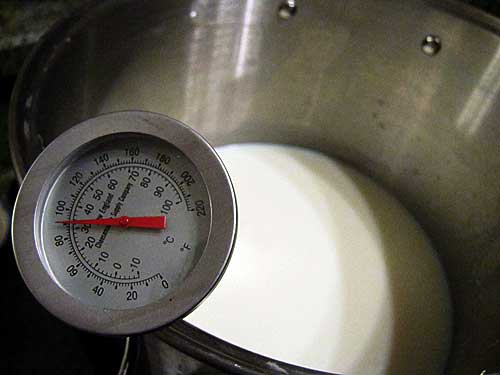
Add the starter; mix well. Cover the pot and let ripen at 90 (or 88 for goat milk) for 15 minutes. Add the cheese coloring. I used all 8 drops. (Munster isn’t supposed to be a highly colored cheese, but cheese coloring is pretty subtle, so I usually add on the high end of the suggested amount.) Cheese coloring can hamper the coagulating power of rennet, so it must always be added before adding rennet and mixed in thoroughly before proceeding with the rennet. If you forget the coloring and add the rennet first, forget the coloring. You missed it!
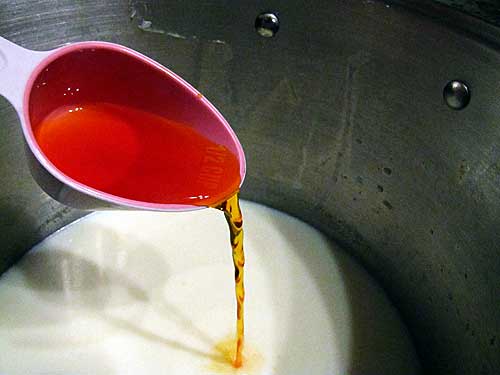
2. Add the diluted rennet and stir gently using an up-and-down motion for 1 minute. Cover and let sit at 90 (88 for goat milk) for 40 minutes or until the curd gives a clean break.
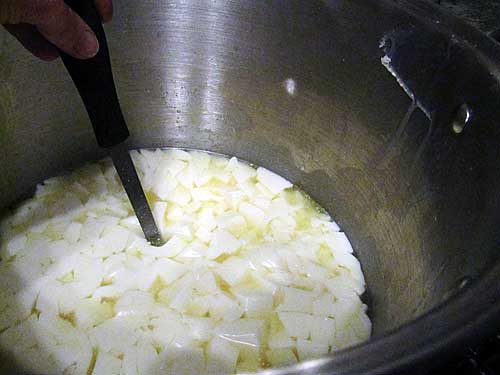
3. Cut into 3/8-inch cubes and let set for 5 minutes.
4. Raise the heat by two degrees every 5 minutes, until the curds reach 100 degrees (98 for goat milk). This should take about 25 minutes. Stir gently to keep the curds from matting.
Do NOT raise the temperature too quickly–that can trap whey inside the curds. Don’t stir too wildly as that can cause a loss of butterfat. The more I work with cheese curds, the more I realize how the little details of this process affect the result. Don’t be afraid of the process, though–the more experience you have with curds, the better your cheeses will become. I’m still learning, and every cheese I make is more experience.
While you’re in the process of raising the temperature of the curds and letting them sit (in Step 5), put a large pot of water on to boil to prepare for Step 6.
A watched pot never boils.
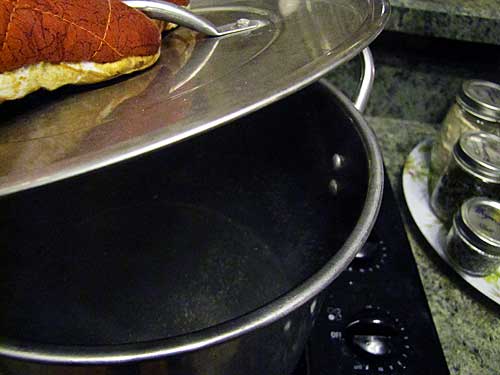
Do yourself a favor and get your pot and your materials sterilized during Step 5 so you aren’t freaking out waiting for the water to boil while your curds ruin.
5. Maintain the curds at 100 degrees for 30 minutes. You should just be able to put the lid on the pot and keep the curds at a level temp, taking the lid off periodically to stir the curds gently to prevent matting. After 30 minutes, let them sit undisturbed for 5 minutes.
6. Sterilize in boiling water one cheese mold, two cheese mats, and two cheese boards.
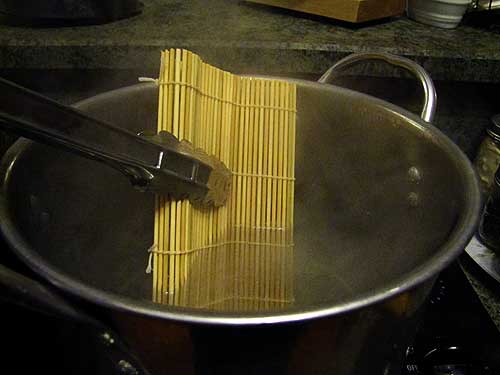
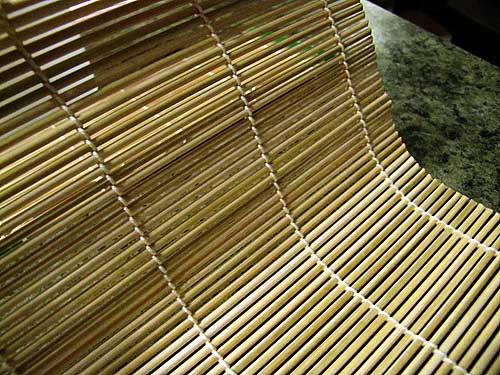
I have a 2-pound mold and a 4-pound mold. I tried the 2-pound mold and couldn’t fit all the curds in there so I ended up using the 4-pound mold. Cheese mats are cute little bamboo mats–you can get them from a cheesemaking supplier. I got mine from New England Cheesemaking. They’re also handy for other hard cheeses for the air-drying process.
For cheese boards, I used a small wooden cutting board and a small platter. Rather than sterilize them in boiling water (which seemed a tad difficult!), I wrapped them in foil. The cheese doesn’t actually touch the cheese boards, so I figured this was good enough if not ideal.
Now you have to figure up your setup for the “mold sandwich” you’re about to prepare. Bacteria- and mold-ripened cheeses press under their own weight rather than in a cheese press. The cheese drains through the holes in the sides of the mold and through the cheese mat underneath it. You set the whole thing over a sink or a pan (to catch the whey drainage).
Place a cheese mat on top of a cheese board and set the mold on top of the mat. You should be preparing all of this for Step 6 during Step 5 so that you are prepared immediately to move through Step 6 and get on with Step 7. Otherwise, your curds will be sitting and sitting in the pot–and you may ruin your curds.
7. Drain the whey down to the level of the curds. Transfer the curds to the mold that is sitting on top of the mat. Place another cheese mat on top of the mold and the other cheese board on top of that. Now the cheese is pressing under its own weight alone.
8. Let drain for 30 minutes then carefully–very carefully!–flip it. (The most whey drains out during the first 30 minutes. Each time I have made Munster using a pan for drainage catching, I temporarily set the mold sandwich on the counter and emptied the pan then put the mold sandwich back on the pan.)
9. Repeat the process 5 more times, flipping the mold sandwich every 20 minutes. Flipping the mold sandwich is a real balancing act. You have to be quick! Or the cheese will go sideways in the mold and mess up.
Here is my mold sandwich situated over the sink. I used a large baking rack to set it over the sink. I didn’t like this setup. It was a bit rickety and it almost fell into the sink a couple times.
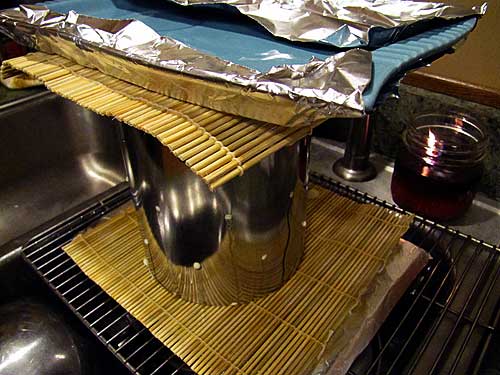
Here is my mold sandwich over a 9 x 13 pan, using another baking rack. This was much easier to deal with, and is how I did my setup after the first time and forever after.
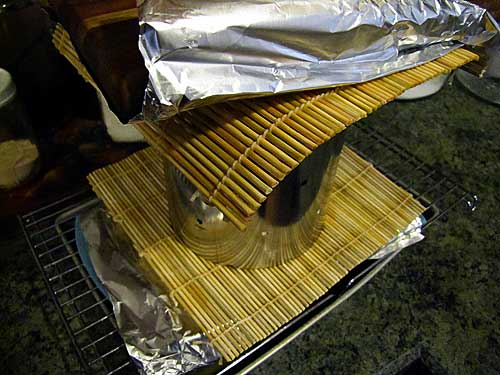
10. Let the cheese rest (in the mold) overnight at room temperature.
11. Make a saturated brine solution with 2 pounds of cheese salt and 1 gallon of cold water. Remove the cheese from the mold (just lift the mold up from the cheese, it will come right up) and place it in the brine.
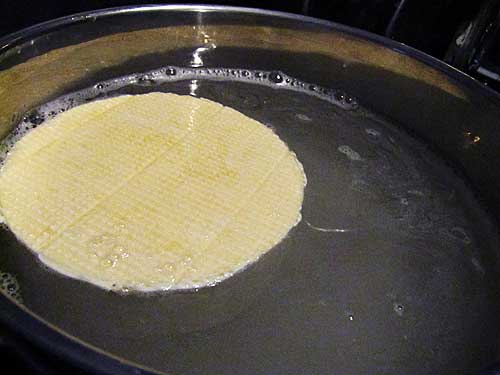
Keep it soaking in the brine at 50 degrees for 12 hours. Flip it over several times. Munster, like a number of other cheeses with a short aging time, isn’t salted before pressing but is instead soaked in a brine.
12. Remove the cheese from the brine and pat dry with paper towels. Reserve the brine for other uses. You can store the brine in the fridge and use it over and over. To re-use it, boil it, add additional salt (until the salt no longer dissolves in the brine–that’s how you know it’s saturated) then cool and refrigerate.
13. Lightly spray the surface of the cheese with the red bacteria. I wasn’t sure what lightly spray meant exactly, but what I did was spray the surface all over (including the sides) twice using the fine misting pump on my atomizer.
14. Flip the cheese and spray the other side.
15. Let the cheese ripen at 60 degrees and 85-95 percent humidity for 10-14 days. To create a humid environment for my cheese, I placed the cheese on top of bamboo skewers (to keep it up off the surface of the container and let air circulate) in a 9 x 13 storage container and put on the lid.
16. Check the cheese every other day and gently wipe the surface with cheesecloth or a paper towel dampened in lightly salted water. This is the “washing” process. It helps spread the bacteria evenly over the surface and inhibits unwanted bacteria, yeast, and mold from developing. The surface will gradually develop a reddish-brown color. The longer the bacteria develop, the stronger the taste of the cheese will be.
Remember to be attentive to your Munster. After 10 days, my Munsters started developing a slight red cast to the surface. I have been washing them with salt water every other day and will be waxing them soon.
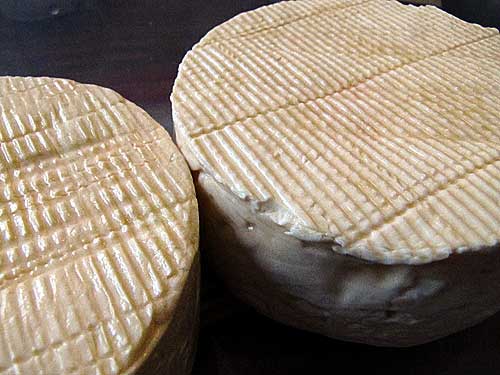
17. Air-dry the cheese at 50 degrees and 95 percent humidity for several days.
18. Wax it! Age it at 45-50 degrees for 6 weeks.
Yield: Two pounds of stinky treasure.
My experience: I was surprised and delighted by the process of making Munster. It was FUN. And fascinating. It presses under its own weight! How weird is that?! I always think dealing with a cheese press is a little bit of a hassle, so I loved that part. Flipping the mold sandwich can be a tricky balancing act, but it’s kinda fun, too. The mold sandwich, the brine soak, and spraying bacteria were all new to me, but they aren’t difficult. It’s just the initial hurdle of trying something new. For me, the most difficult part of making cheese continues to be building my experience in working with the curds. Time and temperature are so important in making cheese of any kind. I’m not a perfect cheesemaker–yet! But making cheese is a journey. I may never think I’m perfect at it, but I am getting better.
Here’s my first Munster, out of the mold and ready to go into the brine soak:
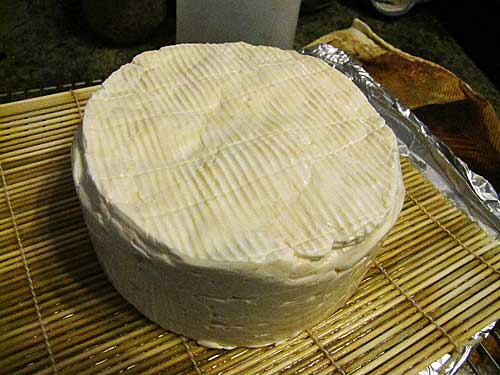
I thought it was a work of art! I think I did pretty good with the curds. They’re knit together fairly well. NOT PERFECTLY. But for me, as a beginner, this isn’t bad.
Here’s my second Munster, out of the mold:
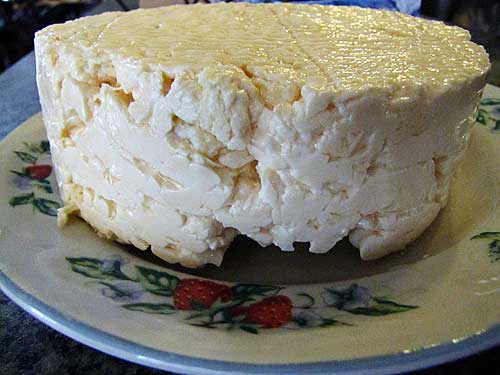
Fail! And I know exactly what I did wrong. I was involved in a few other projects at the same time I was making this cheese. I was heady with my success from my first Munster and I didn’t pay enough attention to time and temperature and I let my curds sit way too long while I finished something on another project. Big mistake. My curds went into the mold too dry, having set in the pot too long and expelled too much whey.
This cheese wasn’t worth the cheese wax it would take to put on it. I cut it open out of curiosity. Big holes inside because it didn’t press.
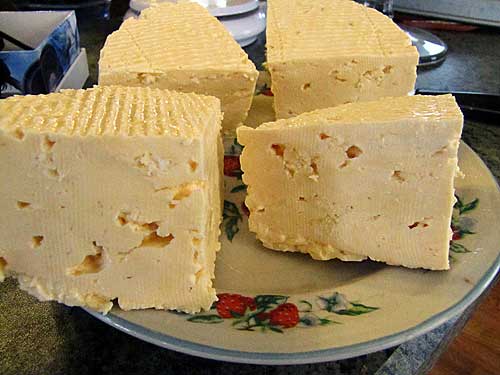
I gave it to the dogs.
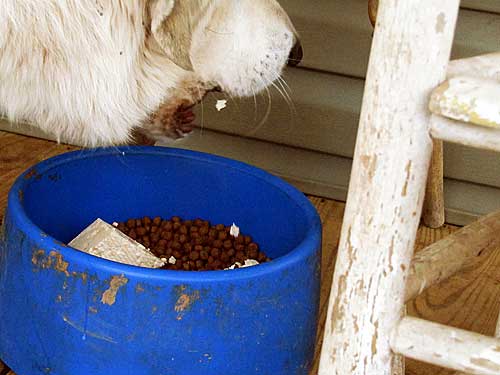
Coco thought it was a tasty treat.
Here’s my third Munster, out of the mold and ready to go into the brine soak:
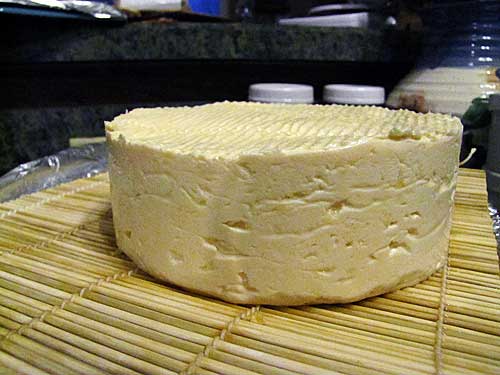
Pretty good! Worth continuing! I paid attention to my time and temperature and got my curds into the mold immediately. I still don’t have my curds knit together perfect and smooth, but it’s not terrible, either. (See Munster #2 for truly terrible.)
The main thing I need to continue working on, with every cheese, is getting my curds right. Since my curds, even in my best efforts in Munster #1 and Munster #3 weren’t knit perfectly smoothly, that means my curds were still a little dry. Cheese expert Jim Wallace from New England Cheesemaking gave me this advice on my Munster adventure: “This cheese should have a moist enough final curd that it easily forms a nice smooth surface after the first turn or so with very little weight. The dry curd can be caused by temps running too high, too much stirring, or even too much acid development caused by excessive milk ripening. I also find that sometimes it is also caused by too much culture addition. For my work here I normally use 1 pack for 3 gallons of store milk or 4 gallons of raw milk. Different milks will behave differently as well.”
On my next hard cheese, I’m going to do a trial using only half a packet of mesophilic starter (per 2 gallon recipe) and see if that improves my curds. That’s something you can try, too. I make all the mistakes so you don’t have to!
I can’t completely pinpoint why, but making Munster is the most fun I’ve ever had making cheese. I know I’ll be making more of it. I’d make Munster every day if I could, it’s that much fun! For next month’s cheese challenge, I’ll be making another brine-soaked cheese, but soon I want to try more mold-ripened cheeses. I want to try it all. I love making cheese! My Munsters are still ripening in the storage containers, by the way, and I’ll report on them as they progress. Soon, I’ll be breaking into my Jack cheeses, too, and will show you how they came out.
This month, to help you love making cheese, too, New England Cheesemaking is providing a giveaway package including (value of each item in parentheses): Hard Cheese Mold ($15.95), Mesophilic Culture ($5.95), Animal Rennet ($6.50), Bacteria Linens ($12.95), Cheesecloth ($5.95), Cheese Salt ($2.95), Calcium Chloride ($4.95), Cheese Wax ($5.50) and Wax Brush ($7.95). The total value of this generous package is $68.65.
For a chance to win: Leave a comment on this post and let me know you want it. ONE winner will be drawn by random comment number to receive the package. Eligible entry cut-off is midnight Eastern (U.S.) time tomorrow night (December 16). This post will be updated with the winner by 9 a.m. Eastern (U.S.) time on Friday (December 17). Return to this post to claim your prize!
UPDATE 12/17/10: The winning comment number, drawn by random.org, is #120, Marion. Email me at CITRgiveaways(at)yahoo.com with your full name and address for shipping!
THIS GIVEAWAY IS CLOSED TO ENTRY.


CindyS says:
Put me in your drawing, please! :snoopy:
On December 15, 2010 at 1:31 am
Shannon says:
Oh, PLEASE enter me in the contest! I HAVE to make cheese!
On December 15, 2010 at 2:10 am
Vicki says:
I don’t have a cow, but I would love to learn how to make cheese.
On December 15, 2010 at 2:19 am
joanne says:
enter me! This looks like a lot of fun…happy, happy.
On December 15, 2010 at 2:33 am
Enjay says:
Please put me in your drawing. Thank you 🙂
On December 15, 2010 at 2:55 am
ElizaRed says:
Would love to have the cheesemaking items and make my own…thanks.
On December 15, 2010 at 4:10 am
judydee says:
Please enter me in the drawing. I’d love to give this a try. Thanks.
On December 15, 2010 at 4:22 am
Blessings says:
I would Love to make cheese..please add me to the drawing.
On December 15, 2010 at 4:29 am
Deborah R says:
I’d love to win your cheese prize package. Thanks for the chance!
On December 15, 2010 at 4:32 am
Roslyn McNeill says:
I love cheese! I would love to win this cheese making package! And thanks for teaching us so much about it, Suzanne!
On December 15, 2010 at 6:55 am
Sheila Z says:
Throw my hat in the ring, I want to try cheese making.
On December 15, 2010 at 6:58 am
CindyP says:
The Munster is looking good!
Would love to win the cheese package!
On December 15, 2010 at 7:06 am
Spiderjohn says:
Enter me please.
On December 15, 2010 at 7:29 am
Gem says:
I WANT it!!!
On December 15, 2010 at 7:32 am
justdeborah2002 says:
I would love to have the chance to start making cheese…thank you for all the beautiful photos and your instructions of how you did it, it makes the mystery of making cheese a little less intimidating!
On December 15, 2010 at 7:36 am
debbie says:
I want to make cheese!!! Please enter me 🙂
On December 15, 2010 at 7:38 am
CasieD says:
I want it!
I want it!
I want it!
I want it!
:hissyfit:
PLEASE 8)
On December 15, 2010 at 7:41 am
Renee Thomas says:
I would love to delve into the wonderful world of cheesemaking!
On December 15, 2010 at 7:46 am
Sherie Adams says:
What a neat challenge you’ve mastered. . . I want to try. Please put me in the drawing!
On December 15, 2010 at 7:49 am
Johanna says:
Win a prize win a prize! I want to win a prize! Please???
On December 15, 2010 at 7:52 am
susan says:
I’m challenging myself to go beyond ricotta and mozz. this next year. this give-a-way would be purfect to get me started! keep making cheese and reporting on how you are doing. It’s nice to know your that not every try turns out,but is a lession learned for the next try. You really encourage me in trying new things. Thank you.
On December 15, 2010 at 7:54 am
tsmith says:
Count me in!
On December 15, 2010 at 7:56 am
Nicole says:
I have my first hard cheese aging as I type- it was an interesting process. i am going to try some soft cheese so I can see how it tastes!! Thanks for opening my eyes to cheesemaking!
On December 15, 2010 at 8:04 am
Nikki says:
Yes please! Add me to the drawing. Thank you.
On December 15, 2010 at 8:16 am
Urbanite says:
After carefully reading my cheesemaking book, I’d already decided not to attempt any mold or bacteria cheeses. But I really appreciate your post, which goes into much more detail. How are you dealing with the cross-contamination issue? This was pretty much my sole reason for deciding against the mold/bacteria cheeses. If there is a simple solution, I would reconsider and take a stab at Camembert.
Please don’t include me in the drawing as I’m already well-supplied with cheese equipment and supplies. Thanks!
On December 15, 2010 at 8:16 am
Dawn says:
I would like to be included in the giveaway. I am not sure I am brave enough to try this cheese, but I ouwl love to try an easier one!
On December 15, 2010 at 8:17 am
Teri says:
Would love to win this!
On December 15, 2010 at 8:20 am
Lillea says:
Thank you so much for sharing your experience making cheese, the failures and successes. I appreciate the pictures because they’re very helpful. I want to venture into cheese making myself and appreciate the detail you went into.
Please enter me in the giveaway contest. 🙂
~ Lillea
On December 15, 2010 at 8:26 am
Nikki says:
Sounds so yummy! I would love to win.
On December 15, 2010 at 8:28 am
jean says:
Thanks for the chance to win this. I had no idea there were two different types of Munster cheese. I was wondering why you were calling it a stinky cheese! The Munster I get in the store is very mild. Yet again I find myself learning something new from you. Thanks!!
On December 15, 2010 at 8:31 am
Laurie Hamar says:
Would love to be entered to win, thank you for the opportunity to try a new craft/food.
On December 15, 2010 at 8:34 am
Julia says:
You continue to move us to new heights with your successes and trying new and different things. I now have access to raw milk and have only made a simple paneer but it was very good. Please place me in the drawing.
On December 15, 2010 at 8:36 am
JenW!~ says:
I’ve been wanting to try my hand at cheese making.Thanks for giving us this chance to win. count me in.
On December 15, 2010 at 8:37 am
proudmary says:
I would love to enter. Looks interesting.
On December 15, 2010 at 8:40 am
Mark Garner says:
I reallllly want to get into cheesemaking!!! Please enter me into the drawing
On December 15, 2010 at 8:40 am
Cindy E. says:
I really want to learn how to do cheese.
On December 15, 2010 at 8:43 am
Phyllis says:
Love watching you make cheese. Recenly I purchased a white ceddar with horseradish. Great cheese. Just a suggestion cause I think I remember you have horseradish.
On December 15, 2010 at 8:46 am
Basic Living says:
Making Munster looks like fun! Please add me to the list for this contest.
On December 15, 2010 at 8:46 am
Debbie Luttrell says:
I’d love to be included in your drawing!
On December 15, 2010 at 8:47 am
Anke says:
Oh do I ever want to be the lucky winner! This would be a fabulous Christmas present for hubby and myself!
On December 15, 2010 at 8:48 am
I Wanna Farm says:
I hope I win this time!
On December 15, 2010 at 8:52 am
Jackie says:
I don’t know if I would be brave enough to try this cheese, but winning this kit would give me good reason to get started…. say cheese! 🙂
On December 15, 2010 at 8:56 am
DebrafromMD says:
Cheese making is on my list of new skills to learn in 2011. This kit would be a good start.
On December 15, 2010 at 8:58 am
Sarah K says:
Please enter me into the drawing!
On December 15, 2010 at 8:58 am
Patricialynn says:
I would love to learn how to make cheese. You make it sound so exciting!
On December 15, 2010 at 9:02 am
Naomi says:
Every time I read a cheese-making post, I get all enthusiastic about making cheese!! I’d love a chance to give it a try!! Thanks for the opportunity! :sheep:
On December 15, 2010 at 9:03 am
annabel52 says:
Oh please enter me in the drawing. Santa just order me some cheesemaking supplies but I hope I will need more. I can’t wait to get started.Thanks for sharing all of the success and bumps in the road to cheesemaking!!!The pictures really help.
On December 15, 2010 at 9:03 am
Hlhohnholz says:
I love reading about you making cheese. I want to join. Cheese Prize, please!
On December 15, 2010 at 9:05 am
windspiritwhimsies says:
:dancingmonster: Munster Cheeeese! :dancingmonster:
Would love to give this a go! Please enter me-thanks!
On December 15, 2010 at 9:05 am
Miss Becky says:
That cheese looks delicious and fabulous. It seems a complicated process that you make look easy. I’d like to try my hand at this, so yeah, I want it.
On December 15, 2010 at 9:07 am
Sundownr / Bev says:
Oh please pick me, pick me!
I wanna make :dancingmonster: cheese, too!!!
On December 15, 2010 at 9:08 am
Rebecca says:
Please enter me in the drawing for the cheesemaking supplies.
On December 15, 2010 at 9:10 am
Brenda says:
Enter me in the drawing please!!!
On December 15, 2010 at 9:11 am
Jan says:
I need to try making the Munster too….
On December 15, 2010 at 9:11 am
melissa says:
I have been slowly adding to my cheese making supplies…..I am just dying to make some of these amazing cheeses you are adventureing into. Thanks for the chance.
Melissa
On December 15, 2010 at 9:18 am
Joy says:
Wow! You are brave. I want to get started on making cheese so enter me in the drawing.
On December 15, 2010 at 9:19 am
Sue Nugent says:
:snuggle: Thanks for all of the great info.,but I’m still struggling with yeast dough and,and hopefully,soon, the lye soap.
On December 15, 2010 at 9:21 am
Karen W says:
would love to win this, am just waiting on the goat babies to be a bit older before I start taking more milk, can’t wait to make more cheese!
On December 15, 2010 at 9:23 am
Heidi says:
This is so great! I love your cheesey posts, well all your posts really. And thank you for sharing your mistakes as well as what turns out. Hopefully that will keep some of us from repeating them.
I’d love to be entered in the contest, please.
On December 15, 2010 at 9:24 am
Faith says:
Please include me in the drawing!
On December 15, 2010 at 9:25 am
VaGirl2 says:
Please put me in the drawing!
On December 15, 2010 at 9:27 am
Ramona says:
I do! Have really been wanting to learn to make cheese. This would set me on the right path.
Glad you finally got your cheese to work out.
On December 15, 2010 at 9:30 am
The Mom says:
Please consider me!
On December 15, 2010 at 9:33 am
Carmi says:
Please put my name in the hat.
On December 15, 2010 at 9:34 am
Amy says:
Me too I want to make some cheese!
On December 15, 2010 at 9:35 am
Kristen A says:
Please enter me in the drawing. You always get me so excited to make cheese.
On December 15, 2010 at 9:36 am
Ramona says:
Please enter me. I love cheese. At one time several years ago a farmer down the road made cheese. I worked for him. I dipped the cheese into the red wax and washed the mold off, and helped with sales. I enjoyed it, except for the temperature in the cheese house. My feet were always cold.
On December 15, 2010 at 9:36 am
Kate says:
Cheese making is the perfect challenge to add to my to-do list
for the coming year. Sign me up for the drawing, please.
On December 15, 2010 at 9:40 am
andrea pierce says:
I would love to try this! Please enter me, as well. And thank you for posting your failures as well as your successes – it makes it less frightening to see that the worst thing that happens is it doesn’t turn out and you feed it to the dogs. lol
On December 15, 2010 at 9:45 am
lavenderblue says:
Munster was my dad’s favorite cheese. Today would have been his 100th birthday. He died at age 96, if my math is right. How cosmic that you would be posting this today. Huh!
I’d, of course, like to be entered in the contest. Munster is also an awesome cheese addition to the only tofu dish I can make well, Tomato Tofu Pie. Adds a smokey-ish flavor, I think.
I do have a question. You must have a gas stove, right? How would someone with an electric stove do step four, slowly raising the temperature by two degrees at a time?
On December 15, 2010 at 9:50 am
tinamanley says:
I would love to start making cheese! Please enter me in the contest. Thanks!
Tina
On December 15, 2010 at 9:56 am
Jeanne says:
I would love to try my hand at making cheese! Please count me in!
On December 15, 2010 at 10:07 am
jojo h says:
Yes, I want it! LOL It sounds like great fun and a wonderful learning adventure.
On December 15, 2010 at 10:07 am
Pete says:
Well, those cheeses look just spectacular! And yes, we would LOVE to have the cheese kit. Wouldn’t that just be a great Christmas surprise?
On December 15, 2010 at 10:07 am
Charley says:
Me! Me! Me! Ohhhh, please pick me! 🙂
On December 15, 2010 at 10:08 am
Jen in ID says:
Wow, that looks like it was quite an adventure! I’ve only tried chevre (a small failure because I think the goats were fed something that made their milk taste off), and mozzarella – that was ok, but I like my mozz moister than how I made it (squeezed too much whey out). Ah well. Haven’t made any hard cheeses or anything else, so would love to be in the drawing for the giveaway!
On December 15, 2010 at 10:10 am
Erik McVay says:
Excellent blog! I love the detail and will be back to read more of your cheese making adventures. Being new to making cheese it’s fun to watch someone else do similar things!
Thanks for working with cheesemaking.com too! I love the idea of winning cheese making supplies!
One question: why give the bad munster to the dogs? couldn’t you have just eaten it as is? I’ve done that with a poor cheddar and it tasted great!
Erik
On December 15, 2010 at 10:12 am
Jenny says:
I’m enjoying these cheesemaking posts and would love to be entered in the giveaway!
~Jenny~
On December 15, 2010 at 10:13 am
claudia w says:
I think I will just stay with candle and soap making (if I ever get started on those). If my name comes up in the drawing, please draw someone else’s name.I just know I would not have the patience to make cheeses.
I just wanted to let you know how interesting this was to read. You are wonderful for doing all these great things and sharing them with us. I learn so much from you each and every day!
On December 15, 2010 at 10:14 am
Adam says:
Thanks for the post–muenster is one of my favorite cheeses but the bacteria has thus far put me off trying it.
Please enter me in the drawing! Thanks.
On December 15, 2010 at 10:14 am
darius says:
Cheesemaking captures my interest so I’ve been following your self-challenge to make a hard cheese every month. My, what a challenge!
I particularly like that you post less than fully successful efforts because that gives me an optimistic attitude that I can make cheese too!
I’m across the mountain from you in SW Virginia, still in the Appalachians, enjoying the same winter challenges. Stay Warm!!
On December 15, 2010 at 10:24 am
Kristen E says:
Oh, I’d love to learn to make cheese! I was trying to avoid it, but I don’t think I can. It looks too fun!
On December 15, 2010 at 10:27 am
Bethany James says:
I would love to win this prize. My husband and I have tried making cheese, but the correct equipment might help us succeed!
On December 15, 2010 at 10:33 am
Amanda says:
Accidently made yogurt cheese the other day, still haven’t made any hard cheeses, but learning from your mistakes 🙂 Can’t wait to get started, this collection of stuff would be very appreciated.
Thanks, and Have a Merry Christmas!
On December 15, 2010 at 10:34 am
patrice says:
Please enter me. BTW- we have the same problem getting help! lol
On December 15, 2010 at 10:34 am
Kathryn says:
Cheesemaking sounds like a fun challenge. Would love to give it a try!
On December 15, 2010 at 10:36 am
Sharon says:
Oh my!!! Count me in, I’d love to win it.
On December 15, 2010 at 10:42 am
Brenda H. says:
Would love to try making cheese, please enter me in the drawing!
On December 15, 2010 at 10:45 am
Rebecca Dieffenbach says:
woohoo!! I would love to have one…I have gotten chevre down pat and everyone loves it in omelets, on crackers and I get really excited to know that in a years time plus two months I will have a jersey cow to milk once Rose has her baby! Thanks
Rebecca
On December 15, 2010 at 10:49 am
Nic, SD says:
Sign me up. Totally!
On December 15, 2010 at 10:59 am
Lynda says:
What a wonderful give away! I have fallen in love with cheese making. I really have enjoyed your *cheese* posts.
On December 15, 2010 at 11:01 am
EightPondFarm says:
You have inspired me to come back to cheesemaking. I did it years ago, then lost interest as much was going on, and I got involved in other things. Now, you have brought me back! Thank you. Please enter me in the drawing; this generous offer would certainly improve my chances of success! :reindeer: :reindeer:
On December 15, 2010 at 11:01 am
Gen-IL Homesteader says:
Please enter my name! Thanks to you and New England Cheesemaking!
On December 15, 2010 at 11:07 am
CindyinTexas says:
OH!!!!!This is awesome, for whomever wins!!!!!I hope it might be me, but will be happy for anyone!!! Thanks for offering it New England Cheese….
On December 15, 2010 at 11:07 am
Lisa Cummings says:
You are such an inspiration! I want to make cheese!
On December 15, 2010 at 11:08 am
Courtney says:
Please include me.
On December 15, 2010 at 11:12 am
Rose says:
My favorite cheese growing up was “Monster” cheese. I think I was about 20 before I realized the correct pronunciation!
I’d love to win the kit!
On December 15, 2010 at 11:15 am
Cousin Sheryl says:
Suzanne, if you want to drain the cheese over the sink, then pull one of your racks out of your oven and lay that over the sink for a larger, sturdier rack!
(I am not in the contest!)
Have a nice day, Cuz!
On December 15, 2010 at 11:19 am
Kim from Milwaukee says:
Pick me pick me! I live in cheeseheadland and if I want to continue to live here they’re making me learn how to make cheese!! It’s an emergency! :hissyfit:
Your blog is the first I read everyday, Suzanne. I want to be you when I grow up.
On December 15, 2010 at 11:20 am
Erica says:
Your Munster looks lovely! I don’t think I saw – have you made it with both cow and goat milk, or just one or the other? I wonder what differences you would see between the two, both in the process, and the finished product… I have some Nubian dairy goats and have made pretty much all of the soft cheeses (with success! though my mozz is still a bit tougher than I’d like) and am looking to move on to harder cheeses when I get a suitable “cave” set up. I’d love to be entered into your drawing, and to hear more about how this recipe turns out!
On December 15, 2010 at 11:24 am
Debbie R says:
Cheese please!
And now I know the difference between munster and munester. Thanks!
On December 15, 2010 at 11:30 am
Kat says:
Oh, I want this! I really do!
I’ve only made mozzarella and ricotta, so it’s high time I stepped up to the plate…
On December 15, 2010 at 11:43 am
geena22 says:
:woof: i wanna win. me me me :wave:
On December 15, 2010 at 11:52 am
TinaG says:
I have been visiting this site for a short time now and am so encouraged and inspired by your knowledge. I have wanted to try a hand at making cheese but stopped short by what I like to call my “paralysis of analysis”. I would very much like to be picked for this giveaway. It just might be what I need to take that first step. Thank you and everyone that leaves posts. You are awesome!
On December 15, 2010 at 11:54 am
Deanna says:
Oh, yes! Please enter me!
Cheese is one skill I still need to master!
On December 15, 2010 at 11:57 am
Tracy says:
Please add me to your drawing. Thank you.
On December 15, 2010 at 12:00 pm
Denise says:
I love reading your posts sbout making cheese, and I would love to try it myself. Unfortunately, I will have to use store bought milk, as I don’t yet have a cow 😥
On December 15, 2010 at 12:03 pm
jan~n~tn says:
I happened to be passing the TV, saw the French lady take a sniff of a wedge of cheese. She proclaimed (with a heavenly look on her face)that it had the fragrance of ‘angels feet’. I don’t know which flavor she was sniffing! Is that what your chickens were thinking, as they were running away – maybe that angels were coming?
My girls are going to be producing sheep milk, beginning in February. I’d better start reading up on that. It sounds like you had a bunch of fun with the Munster. Please enter me in the drawing!
On December 15, 2010 at 12:05 pm
Katie says:
I’d love the chance to win the cheesemaking kit!
On December 15, 2010 at 12:07 pm
Nena Rybarczyk says:
O.k. here I am with some of my equipment gathered and procrastinating only because I need a few more items and have to get through Christmas first. The remaining items coincidentally are in this giveaway package and I don’t know how much more providential that could be. So I’ll cross my fingers that fate will intervene and I’ll win this so I can start my first batch of hard cheese.
On December 15, 2010 at 12:13 pm
Ashlee M says:
Oh my goodness, I want to try cheese making SOOOOO bad, but I need the supplies! Pick me, pick me!! =)
On December 15, 2010 at 12:15 pm
CityGirl says:
Just starting on the list of cheese making materials… 🙂 I’d love a head start.
and a video on this post… would be super
On December 15, 2010 at 12:18 pm
Christina Leonhardt says:
Pick me pick me pick me…..PLEASE.
On December 15, 2010 at 12:50 pm
Patti Jo says:
congratulations on another success! I hope to tackle this one soon, although the bacteria did frighten me a bit as well.
On December 15, 2010 at 12:54 pm
ellie says:
Sweet! This looks like great fun! Please enter my name!
On December 15, 2010 at 12:57 pm
Glenie says:
I would love to win this and try my hand at making cheese. This is something I have wanted to do for a long time maybe winning this would be just what I need to get me started.
On December 15, 2010 at 12:57 pm
Ann says:
I would love to try making cheese!!
On December 15, 2010 at 12:59 pm
Kristen says:
Oooh!! I really want to make cheese!! Please enter me in your drawing, but if I don’t win, it’s okay. I will still continue to watch your cheesemaking posts and enjoy them vicariously. Thanks for the giveaway! 🙂
On December 15, 2010 at 1:06 pm
Betsy Carter says:
Please enter me in your drawing! I love reading about your cheese making challenge!
On December 15, 2010 at 1:11 pm
Marion says:
I’d like to try, so , yes please enter me 🙂
On December 15, 2010 at 1:21 pm
Jen says:
I would love to win the cheese making kit. Thank you for the chance!
On December 15, 2010 at 1:22 pm
Amy Gilpin says:
I have made the mozzarela and would love to try some hard cheeses – please enter me in the drawing
On December 15, 2010 at 1:26 pm
Melody says:
I would love an entry in the contest, please! 🙂
On December 15, 2010 at 1:29 pm
Zonnah says:
I would love to enter!
On December 15, 2010 at 1:29 pm
Abby's Mom says:
Would love this one! Munster is my little one’s favorite cheese, TY for the lesson. 🙂
On December 15, 2010 at 1:45 pm
Ned Miller says:
Awsome… I really enjoy reading about your cheesemaking expierences. So far I’ve only tried mozzerella. Of course I’d like to win the cheesemaking kit! 🙂
On December 15, 2010 at 2:01 pm
Brandy M. says:
I would love to be signed up for the contest!! THANK YOU!!
On December 15, 2010 at 2:01 pm
Taly says:
Add me to the contest please!
On December 15, 2010 at 2:15 pm
Terrie Travers says:
Oh, please, put me in the drawing! Nice article & sweet, healthy looking birds!
On December 15, 2010 at 2:19 pm
Rosemeri B. says:
I would really like to be a part of this drawing. I love homemade cheese.
On December 15, 2010 at 2:30 pm
Amanda aka Salamander says:
I read this post this morning and just had to come back to let you know I have had the childrens story The stinky cheese man in my head all day. 😀 I think this is a wonderful challenge you have taken on. Thank you for sharing with us. Your step by step instructions with pictures have me thinking about trying to make cheese.
On December 15, 2010 at 2:42 pm
Chris Bredenkamp says:
I want this! Yes yes! Add me to the drawing.
On December 15, 2010 at 2:51 pm
Heidi says:
I want the cheese making kit! Thanks
On December 15, 2010 at 2:54 pm
Luann says:
Seems so involved to make munster….Please enter me…thanks
On December 15, 2010 at 3:00 pm
Luann says:
Seems so involved to make munster….Please enter me…thanks
says I already made a comment but I dont think so…
On December 15, 2010 at 3:05 pm
Carol H. says:
I want it! You are such a brave soul tackling all of these cheeses! I think I will start with something a little less scary.
On December 15, 2010 at 3:45 pm
Becky W says:
Please enter me in the drawing for cheese supplies…I SOOOO need a pick me up this week….. :hug:
On December 15, 2010 at 3:48 pm
Heather E. says:
I want it! I’d love to make Munster – looks like fun :happyflower:
On December 15, 2010 at 4:01 pm
Suzanne Perry says:
Please enter me. I’d love to give this a try and learn to make my own cheese.
On December 15, 2010 at 4:02 pm
farmershae says:
I want!!!!! :hissyfit: Please? :happyflower:
On December 15, 2010 at 4:11 pm
Kevin Swanzey says:
yes, i want the giveaway cheese package. definitely. no question. thanks for the opportunity!
On December 15, 2010 at 4:13 pm
Laurie Freeman says:
If my attempts are like yours, both my dogs :snoopy: and I :fairy: will be happy! Please put me in the drawing
On December 15, 2010 at 4:27 pm
Mother of a ROCKSTAR says:
Please put me in for a chance to win. Thank you.
On December 15, 2010 at 4:35 pm
Bob Emro says:
Nice job Suzanne! Add me to the contest, please.
On December 15, 2010 at 4:39 pm
Joanne Semanie says:
I admire your bravery and thanks for this post. The photos help a lot. I’d like to win this package – then take a vacation to try it!
On December 15, 2010 at 4:42 pm
Mrs. Doyle says:
Thank you so much for sharing your experience! I’m glad to have found your blog through the ‘Moosletter’ Your details and pictures add a lot to understanding the process. I have been intimidated to try a hard cheese, but maybe I’ll dare myself a little this coming year 🙂
On December 15, 2010 at 4:47 pm
Mandy says:
Please enter me into the drawing. I started making cheese last year and really have had fun with it. Thank you for such good tutorials on how to make it!
On December 15, 2010 at 4:48 pm
gaye ray says:
Cheese making supplies are on my list for christmas……I cannot wait to get started. Your blog is perfect to “show the way” Please enter me in the contest!
On December 15, 2010 at 4:51 pm
RaShell S. says:
Thank you for entering me into the drawing. I am signed up for a 2 day cheese making class next month and I can’t wait! 😆
On December 15, 2010 at 4:55 pm
jenn says:
neat blog! i’ve wanted to try some of the hard cheeses — so far i have only tried making soft ones (am also a bit of an instant-gratification person — i want to eat it after only a few hours/days, not after weeks or months of aging!)
would love to win the giveaway to give it a try though!
On December 15, 2010 at 4:58 pm
Pat DiStefano says:
Another inspirational lesson. I am eagerly awaiting for my soap making ingredients that my husband is giving me for Christmas. Now I have another project to look forward to for New Years- cheese. Thanks for making all these projects look so much less scary!!
Pat
On December 15, 2010 at 5:01 pm
Caitlin Harvey says:
I just took a class on making mold ripened cheeses. We made a cambozola. I am looking forward to trying it on my own now (equipment would be most helpful! hint hint)
On December 15, 2010 at 5:09 pm
Bethany Madrid says:
I would LOVE to win this prize package….I’ve got a true passion (and stomach) for anything cheese!
On December 15, 2010 at 5:13 pm
Marlena says:
I would like to be entered into the giveaway. Would love to try my hand at making cheese 🙂
On December 15, 2010 at 5:17 pm
Karen says:
Oooo… I’m intimidated but intrigued. Please throw my hat in the ring for the cheesmaking supplies.
You are a wonderful writer. Thanks for bringing us along on your adventures! I really enjoy your blog.
On December 15, 2010 at 5:22 pm
Karen says:
*cheesemaking
I sure hope my cheesemaking skills will someday surpass my typing prowess (a low bar for sure).
On December 15, 2010 at 5:24 pm
mygirls01 says:
I would love to win it!
On December 15, 2010 at 5:25 pm
Becki Chall says:
Just found your blog thanks to the Moosletter. Makes me feel like I am not alone in the trials and tribulations of amateur home cheese making.
:cowsleep:
On December 15, 2010 at 5:54 pm
Denise says:
I would love the cheese give a way!
I love reading the challenge and am VERY impressed by your cheesemaking. Where do you store your cheese to keep it at 50 degrees? That is my dilemma…haven’t found the right spot yet. i will look forward to next month’s adventures.
Thank you!
Denise
On December 15, 2010 at 5:55 pm
Jacinta says:
Please enter me in the drawing.
On December 15, 2010 at 6:01 pm
Wendy Hurtado says:
I’ve walked away from a cheese for too long too! Maybe if I had the incentive of a cheese prize dangling in front of me I would have been a better student.
On December 15, 2010 at 6:05 pm
megan says:
I want it.
On December 15, 2010 at 6:07 pm
Chanda says:
My chickens give me the same response whenever I try to enlist their help… It’s good thing they lay nice eggs… LOL By the way-I want that cheese giveaway! :sheepjump:
On December 15, 2010 at 6:21 pm
Julie M. says:
Please enter me in the drawing. I’m an avid cheesemonger!!
On December 15, 2010 at 6:21 pm
Eweforia says:
You are giving me courage to try harder cheeses myself. Great job! Please register me for the give-away. Those are all things that I will need. I have a hand-built mold and have envied the ones at New England Cheesemaking. :sheep:
On December 15, 2010 at 6:26 pm
Julie M says:
Please enter me in the drawing.
On December 15, 2010 at 6:28 pm
Sharon Skelton says:
I would love to win this! I am going to learn to make cheese, bread and soap in the new year!
On December 15, 2010 at 6:31 pm
Shelby says:
Please add me to the list for the drawing.
On December 15, 2010 at 6:34 pm
Toni Cunningham says:
Suzanne, I enjoy the witty writing and photos. The hints and pics of cheese failures are helpful too. Toni
On December 15, 2010 at 6:42 pm
Alan Lunt says:
I would like to be entered for the drawing. Thanks
On December 15, 2010 at 6:59 pm
mommafox says:
Who’s afraid of the Big Bad Cheese? No one should be with Suzanne here to hold your hand and lead you through the process, step by step. Please enter me for a chance to win this generous giveaway.
On December 15, 2010 at 7:32 pm
Donna Davis says:
Hello Suzanne,
I have lost track of how many different cheeses I have tried from Ricki’s splendid book! But I have not yet tried one of the mold ripened cheeses. You have inspired me! Would love to win the package!Please enter me in the contest.
On December 15, 2010 at 7:35 pm
Ginny says:
I love learning how to make cheese. And I loved the shots of the chickens in the middle of the process since I have some of the same breeds. Hope I can be the lucky winner since I am just a beginner. Ginny
On December 15, 2010 at 7:46 pm
Linda T. says:
Please count me in on the draw
On December 15, 2010 at 7:52 pm
Naomi says:
i would like to know if you have or would you attempt cottage cheese ? i would like to be in the drawing to
On December 15, 2010 at 7:53 pm
Marc Janke says:
Hi, I like your site. Please enter me in the competition.
On December 15, 2010 at 8:01 pm
Quietstorm says:
PLease toss my name in the hat…. I keep telling Santa that I would like this for Christmas but I dont think he’s getting the hint….. :reindeer:
On December 15, 2010 at 8:10 pm
Alyson says:
Oh how I would love to win the prize. It would be terrific to have some arsenals in order to try making more involved cheese other than cottage cheese!!! Please please! :sheepjump:
On December 15, 2010 at 8:29 pm
Nanci Nowlen says:
thank you so much. I really would like this gift package. I have made pannier, but am looking forward to trying lots of different cheeses this coming summer. I work a school year. My Airedale, Trevor loves cheese, but he can not have aged cheeses as I have heard that is not good for them.
On December 15, 2010 at 8:29 pm
Leah's m0m says:
:sheepjump:
Yes! Sign me up for the drawing. LOVE cheesemaking!
On December 15, 2010 at 8:44 pm
Tonya says:
Oh me! I’ve had some semi-successful forays into the cheesemaking world and a few not so successful (you may remember my velveeta that was great until I heated it but then reverted to a milky state….. 😥 ) My teenage kids and their friends make loving fun of my cheesemaking desires 😆 but I’m going to keep trying!
On December 15, 2010 at 8:49 pm
Stephanie Schneider says:
It’s almost christmas…and I’ve been VERY good!!
On December 15, 2010 at 8:55 pm
Terry C. Garratt says:
Wow! Isn’t this just the most fun you have ever had in your life?
If someone had told me 25 years ago when I got my first goat that I would begin a love affair with more passion then I have even with my husband (pleaseeee don’t share that with him) with milk and stainless steel I would have never believed it!
You go!
On December 15, 2010 at 8:59 pm
Paulette Samples says:
I’m enjoying your cheese making and I’m joining you! I have to send for a couple items for this one though. Sounds good! Please put me in for your drawing, thanks!
On December 15, 2010 at 9:02 pm
Kelli says:
Pretty please with sugar on top? I asked for canning supplies for Christmas and cheese making is the next goal on the list!
On December 15, 2010 at 9:03 pm
lisa reyes says:
Thanks for sharing your chess making adventures. I made my first cheese this past weekend. I made queso blano using a recipe from a library book. It was more like a queso freso but it was delicious none the less. I made another batch for work and it was devoured :hungry: by my colleagues!
My dad is so excited about my new hobby and we are planning on making some cheese over the x-mas holidays. I found a dairy farm nearby that sells raw milk and we are going to experiment with the same recipe.
My dad makes wine and I am looking forward to the day when I can make “fancy” cheese to eat with the wine. Please sign me up for the kit—thanks!
On December 15, 2010 at 9:08 pm
Hugh says:
Absolutely wonderful. Few too many people dig stinky cheese.
On December 15, 2010 at 9:14 pm
Mel says:
Please enter me in the give away….I make mozzarella and creme fraiche and NEED to branch out!!!
On December 15, 2010 at 9:29 pm
Leah's m0m says:
I enjoyed reading your experience w/mold ripened cheeses as I’ve not tried any yet. The idea of not having to use the press is wonderful – but I’ve been concerned about the mold contaminating my other cheeses (and the cave) that are aging. I’ve thought I need a second cave for the mold ripened cheeses to avoid that…
Anyway – good post. I think I’ll be trying some mold ripened cheeses in the near future since reading this!
And…I’d love to win the drawing!!
On December 15, 2010 at 9:36 pm
Blyss O'Cael says:
What an extra Merry Christmas it would be if I won this!
On December 15, 2010 at 9:37 pm
Bonnie Ward says:
Wow! You are a cheesemaking hero. Thanks so much for letting me know about the failures (love cheese #2) as well as the successes. Makes my poor ugly first M. Jack less of a personal failing ;). And I’d love to be entered in the drawing!
On December 15, 2010 at 9:51 pm
Stacy says:
Please enter me in your giveaway. I have been wanting to try cheese making for several months now. A friend introduced me to your blog. Love it! Thank you for all the info.
On December 15, 2010 at 10:15 pm
Shar says:
I LOVE monster, errr, munster cheese! I’d love to be counted in! TIA!
On December 15, 2010 at 10:24 pm
Landodixy says:
yes, yes yes, I want to win this cheese making package!
On December 15, 2010 at 10:46 pm
Mary Ellen says:
Please enter me, I would love to win the cheese making package.
On December 15, 2010 at 10:59 pm
Joey says:
So enjoy reading about your cheese challenge adventures. Please enter me for the cheese making package!
On December 15, 2010 at 11:10 pm
drucillajoy says:
I tried making mozzerella last spring & it was a total flop…I am promising me that I will persue this again after Christmas. I have the book, but I would love to win these other items. Please enter me in your drawing. Thank you
On December 15, 2010 at 11:12 pm
holstein woman says:
197 and counting.. As everyone else, I would like to be entered to have a few things to make another cheese. THANK YOU Suzanne and Rikki Yeah
On December 15, 2010 at 11:13 pm
holstein woman says:
Drucilla Joy, Not every cheese is easy for every person. You might excel at Munster and not Mozzarella. I am best at burning Ricotta.
On December 15, 2010 at 11:15 pm
Elizabeth says:
Sign me up too!
On December 15, 2010 at 11:44 pm
Kelly Hammond says:
Hello Suzanne,
I have been making soft goat cheeses for a while now and have been wanting to try hard cheeses for a long time but was afraid to try it. This starter kit would give me the push I need to get this hard cheese experiment going. Sign me up for the drawing!
On December 15, 2010 at 11:55 pm
Heather Carter says:
I would love it!! Need more cheese making supplies
On December 16, 2010 at 12:39 am
Joan Galbi says:
I’m so impressed with your honesty and willingness to share!
Like you I have been stricken with the cheese bug, and I try to make one cheese a month. Right now I’m into molds.
Happy Holidays!
Joan Galbi
[email protected]
On December 16, 2010 at 1:58 am
Betty Jean says:
Oh, I would dearly love to win this. My hubby and I want to try our hand at cheese. Thanks!
On December 16, 2010 at 2:44 am
Alexa S. says:
Would love to win! My cheesemaking skills are still beginner level, but your munster is inspiring me!
On December 16, 2010 at 2:48 am
Kathy says:
I would love to win the cheese kit, what fun to try some of these cheeses. Glad to know store bought milk will do the trick. Thanks for excellent details.
On December 16, 2010 at 5:05 am
northcountrygirl says:
I would really, really love to win this cheese kit. Please enter me in your drawing. Thank you!
On December 16, 2010 at 6:53 am
Carol Benson says:
This is such an inspiration, I learn a lot from seeing the photos, I will try a muenster next! Thanks! I would love to win!
On December 16, 2010 at 6:56 am
Carrie Anne says:
I would love to win this cheesemaking kit! Thanks!
On December 16, 2010 at 8:19 am
lauren says:
Would love to try hard cheeses 🙂 Please enter me in the contest
On December 16, 2010 at 8:24 am
Deb says:
Pick ME! Pick ME! Pick Me! I would love to try my hand at making cheese, but if I have to shop for the milk and supplies, organize myself AND order all the stuff I will never get to it.
On December 16, 2010 at 8:24 am
Lena says:
Cheese making is fascinating. Thanks for sharing your experience! Please enter me in the contest and thanks so much. :wave:
On December 16, 2010 at 9:19 am
Jillian M. says:
Put me in the drawing!
On December 16, 2010 at 9:22 am
Abiga/Karen says:
I would love to win, thanks for the opportunity and the cheese instructions.
On December 16, 2010 at 9:24 am
Lisa says:
Please enter me in the drawing. Love reading this site and learning. Thanks so much!
On December 16, 2010 at 9:49 am
Louise Clark says:
You make me want to try everything. Please include me in the give away.
On December 16, 2010 at 9:53 am
I Wanna Farm says:
I want to make cheeeeeeeeeese!
On December 16, 2010 at 9:54 am
Deborah says:
Loved your post! Read it twice! Will read it again when I try Munster….. gulp!
Please enter me too!
Oh, and I think some of our chickens may be related :chicken:
On December 16, 2010 at 10:03 am
Dan T says:
looks good to me, my dogs and chickens have eaten 90% of my cheese trys so far, my one and only try at a red cheese did not look near as nice, I think you have given me the nagging idea to try again. My wife is already grumbling about loosing her kitchen for a day or two, Thanks PS nice prize!
On December 16, 2010 at 10:15 am
Bob Dye says:
Hi – I luv your writing – Munster looks interesting. Enter me in your drawing.
On December 16, 2010 at 10:19 am
Susan says:
Hi Suzanne, Love reading about your cheesemaking exploits. Next week we will try our very first hard cheeses, made last summer! Our cow is dry now, but in a few months when our milk cow has her calf we will be back at it. Please enter us in your drawing.
On December 16, 2010 at 10:26 am
Pat says:
This looks like so much fun I will have to try it for sure!!! DH loves stinky cheese.
On December 16, 2010 at 10:30 am
Kellie Green says:
I love Muenster! Any cheese is this house doesn’t last long. Please enter me.
On December 16, 2010 at 10:57 am
Kellee says:
Ohhh!!! Another cheese kit giveaway! Count me in! It would be a great Christmas gift…for me! :shimmy:
On December 16, 2010 at 11:06 am
Kathi N. says:
Please do include me in the drawing. Awesome post — loved seeing the results pics especially. Thank you.
On December 16, 2010 at 11:09 am
Leah's Mom says:
Anyone have any tips on how they separate their bacteria or mold ripened cheeses from the Non mold /bacteria ripened cheeses so that there isn’t contamination in your aging area? :bugeyed:
And…Enter me in the drawing! :happyflower:
On December 16, 2010 at 12:26 pm
Suzanne McMinn says:
Leah’s Mom, keep it separately in a plastic storage container placed inside the fridge.
On December 16, 2010 at 12:27 pm
AimeeS says:
I want one! 🙂
On December 16, 2010 at 12:37 pm
Julie says:
Thank you for sharing all of your wonderful adventures with us!!
On December 16, 2010 at 12:54 pm
Amy Nicewonger says:
I would love to win the package…..will be trying your Jack cheese as soon as my molds arrive..
On December 16, 2010 at 1:10 pm
Heather C says:
Ordered stuff to try this cheese out too! Happy for the play by play and pictures!
On December 16, 2010 at 1:57 pm
Judy McCormick says:
Yes, add me to this drawing!
On December 16, 2010 at 2:07 pm
Lindsay says:
The cheese looks delicious! I would like to be entered into the drawing, please!
On December 16, 2010 at 2:51 pm
Lewis M. Shepard says:
I enjoyed your adventure of making munster cheese because you use some of the similar methods that we are going to use when we make our next batch of cheese which is going to be Limburger.
On December 16, 2010 at 3:34 pm
Louise Gava says:
I read your story about munster making just after putting 2 lbs of curd in the press for a cheddar, and it got me excited about trying my hand at a mold ripened cheese. Thanks for sharing the info. I could certainly use everything in the prize package.
On December 16, 2010 at 3:49 pm
Joshua says:
Please enter me in the drawing. I love stinky cheese and would like to try making some.
On December 16, 2010 at 4:11 pm
Catherine G says:
You are quite courageous to try and make cheese- you certainly do a good job at it. Now why doesn’t the Munster we are used to purchasing have such a stinky odor that you mention?
On December 16, 2010 at 4:35 pm
Diana says:
Thanks for the great pictures along with the cheese experience. I don’t know if I’m too late to enter that contest you’ve mentioned, but I’d love to have that set, and follow in your stinky-cheese footsteps!
On December 16, 2010 at 6:42 pm
Leah's Mom says:
Thanks, Suzanne. Seems like I remember reading one of Jim Wallace’s documents about the cheese cave and him noting that they could be done in covered containers in the same aging area. I think I’ll look back through my stuff and see if I can find the specifics on that. I’ve just been so gun-shy on the bacteria/mold ripened cheeses for fear of contaminating my whole aging “cave” fridge.
Enjoying the blog!
~Merry Christmas to you and your family~
On December 16, 2010 at 6:45 pm
Joy says:
Sign me up too!!! Enjoying the blog! :dancingmonster:
On December 16, 2010 at 6:50 pm
Chuck says:
:happypuppy: I’d like a chance to win too! My wife would LOVE this for Christmas!
On December 16, 2010 at 7:25 pm
LisaAJB says:
Oh, I’d like to win. Thank you!
On December 16, 2010 at 7:38 pm
Turtle Mom says:
Ooh, ooh! Pick me! Pick me!
On December 16, 2010 at 7:40 pm
Melissa M says:
I’d sure like to have this! I have a goat in milk and want to try cheese but just can’t figure out what I need to order to get started.
On December 16, 2010 at 7:48 pm
Linda Goble says:
I would love to make cheese. Please enter me in the drawing. MERRY CHRISTMAS!!!!!!!!!!!!!! :snowman:
On December 16, 2010 at 8:36 pm
Brigitte says:
I would LOVE it!!!
On December 16, 2010 at 9:35 pm
Chris Harvey says:
I have tried making Munster a couple of times, also with mixed results, the first was a complete wash out and never matured beyond the polystyrene phase but the one that worked was the best cheese
I ever made! Stinky in a great way with a really delicious flavor.
You are so right about needing to pay full attention to each stage because success makes it well worth the effort.
This was all some time ago but reading your excellent blog really makes me want to dust off my cheese making gear and try again. So I’d definitely love to win your giveaway so please enter me
Happy Holidays
On December 16, 2010 at 10:41 pm
Suzanne McMinn says:
This giveaway is closed to entry. The winning comment number is #120, Marion. Email me at CITRgiveaways(at)yahoo.com with your full name and address for shipping!
On December 17, 2010 at 9:06 am
Roxanne says:
I would love to win, please enter and pick me!!!
On December 17, 2010 at 10:24 pm
markleisen says:
This was a great article, especially all the photos. I too am a beginning (now intermediate I think) cheesemaker, or fromagier as I like to call myself. I’m sitting here at around 4:30am checking on the 4 gallon batch of muenster I made last evening using Ricki Carrol’s book too. Great point about rehydrating the red linens, I didn’t know that but miuxed it up yesterday anyway around 5pm so I should be fine by the time my brining is started and finished. Wish I knew how to post a pic to this comment as my curds set up very nicely in my 8 inch closed bottom (with drainage holes) mold. And I agree this has been my most fun cheese to make so far. I’ve made the required mozzarella 6 times or so, soft spreadable lactic cheese (delicious with garlic, chives, salt and pepper mixed in), Montery Jack, traditional Cheddar, traditional Swiss (aging it at room temp right now watching it bulge with eyes forming) and a Colby Jack mixture by combining separate one gallon batches of Jack and a highly colored Colby for contrast. Flipping the cheese was a little nerve wracking at first but the curds cooperated nicely. I look forward to reading past cheesemaking articles here as well as future ones. I can tell we both share a passion for our new hobby!
On May 9, 2013 at 5:51 am