

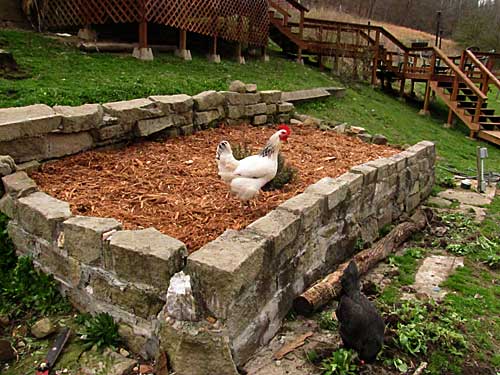
The staff has been on hand this week as I’ve randomly taken time on different days to clean out this side of the studio gardens. It’s not time to plant here yet, but I figure if I clean out a little at a time, I’ll be ready. This big bed was used previously for growing tomatoes, peppers, and herbs. I took two tomato cages out of it. (I will not be planting any vegetables in this area because of the chickens.) I left a rosemary plant that might possibly have made it through the winter. We’ll see. I can’t usually get rosemary to over-winter, but then I didn’t plant this one! And if it lives, that will totally explain it.
Today I finished up the job with dumping a bunch of mulch in the bed.
And I gave this area a haircut.
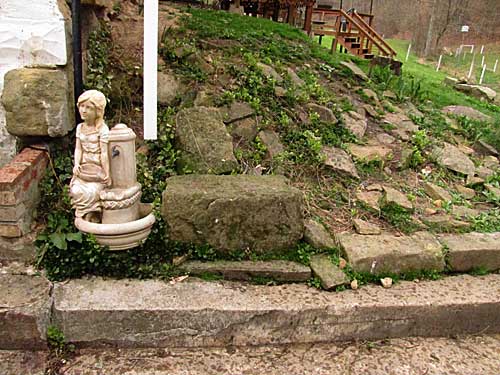
I still don’t know what I’m going to do about that inconvenient grass on the knoll. Somebody told me that donkeys don’t eat flowers. Mowing grass seems so wasteful. Grass is FOOD. I’m considering fencing in the entire house and yard area and bringing in Jack and Poky. Or maybe Patriot. I’m told horses don’t eat flowers either. IS THIS TRUE?
I also cleaned out and mulched this narrow bed to the side of the house.
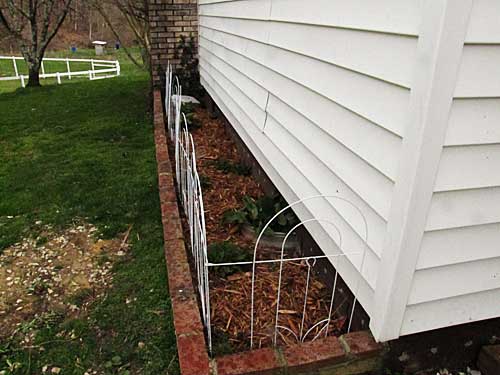
Not sure what all is growing in there, so if I wasn’t sure it was a weed, I left it until I decipher whether or not there are some perennials coming up in there. Probably, they’re just weeds, but I’m only two-tenths of a master gardener, so don’t expect me to know.
Up next, I’ll clean out and mulch the beds at the front of the house and also tackle the large rose garden on the other side of the studio. There are quite a few bulbs, flowering bushes, etc, all around the house and studio, so what I’ll be adding when the time comes will probably be lots and lots and LOTS of flowering annuals. I think it will be beautiful.


robinswoods says:
You mean I’m not the only one who can’t get rosemary to overwinter? Everyone else around here has huge bushes of the stuff… and mine just die back at the first hint of frost or snow, even if I mulch them. Let me know when you find the secret to making them thrive!
On March 17, 2012 at 3:27 pm
princessvanessa says:
The way to tell if a plant is a weed or a flower—-if you pull on it and it comes out of the ground easily….flower. If you pull on it and it remains stubbornly rooted in the ground….weed. 😆
On March 17, 2012 at 3:46 pm
CarrieJ says:
It’s going to be beautiful! Wanna come do mine?
On March 17, 2012 at 3:50 pm
leneskate says:
:snoopy: so happy you are having a good time learning about your new farm! So happy your getting a horse soon! :snoopy:
On March 17, 2012 at 3:51 pm
prvrbs31gal says:
How about chamomile, calendula, coneflower, anise hyssop and zebrina and all the other pretty ‘flowers’ that also have medicinal properties? That’s what I’m planting. Bonus is that most of them also are great for the bees. Pretty, useful, and helpful for pollinators. Lots of bang per buck.
On March 17, 2012 at 4:06 pm
CATRAY44 says:
Looking great!
On March 17, 2012 at 4:26 pm
perry says:
There should be some sort of ground cover that will grow in the areas on that little hillside that now have grass in them. Look on the net for ground cover and put in your growing zone and hopefully something will show up. Also, for early spring you should be able to put a few small bulbs in there like crocus and daffodils I would think. But first find that ground cover because it will be perennial. It will be one less thing for you to worry about and always looks great. Love what you are doing to the farm, one step at a time.
On March 17, 2012 at 6:04 pm
folkwoman says:
We’ve gotten rosemary to survive – we put it in a big pot so that it can be moved into the garage or shed. It was such a mild winter around here that it probably would have survived anyway. But I think this is the second or third year for it.
On March 17, 2012 at 6:41 pm
holstein woman says:
Suzanne, what else could I possibly add. I like pansies and anything in the pansy family. The come up every year if you get the old styles and they reseed themselves. They are very colorful and do lots better if you deadhead them weekly. Also I really like to use them for decorations on cheese platters and they are edible!
When I had 120 ft of them in the front yard years ago I had a little love bird that I took outside with me and when I sat her down by me I told her to only eat the hard seed pods. She never ate the buds. :fairy:
On March 17, 2012 at 6:56 pm
Suzanne McMinn says:
Is no one going to tell me that horses eat flowers? Because otherwise I’m going to carry on with my mad plan, and you know how dangerous that can be!
On March 17, 2012 at 7:45 pm
Miz Carmen says:
I have no idea about horses – but I know that if you put up some temporary fencing that the chickens can’t jump easily around that grass you want to get rid of, and put them in there for a day or three, they’ll rip it all out for you!
8)
On March 17, 2012 at 8:01 pm
JerseyMom says:
Yes, horses eat flowers. I have seen my horses eat flowers. Not all flowers, but that might be just that I’ve not offered them all flowers. I distinctly recall them eating the black eyes susans that I offered them last summer….. I know they will eat sunflowers and the whole plant, actually. Worse than the ‘will they eat them’ questions is ‘will they get sick if they do’ Here is a list of plants you might want to thing about for your horse:
Potential problem if eaten in large quantities:
• Buttercup
• Morning glory
• Pokeweed
• St. Johnswort
• Gum-weed
• Astragulus and Oxytropis spp/(vetches and locoweed)
• Avocado leaves
• Bracken fern
• Most bulb type flowers (tulip, iris, etc.)
• Wilted red maple leaves
• Acorns/new oak leaves
Avoid at all costs (Lethal or severe toxicity potential)
• Lily of the Valley
• Larkspur
• Tomato or potato plants
• Rhubarb leaves and roots
• Poison hemlock
• Foxglove
• Leafy spurge
• Mustards
• Jimsonweed
• Alsike clover
• Blue flax
• Sorghum (Johnsongrass and Sudan grass)
• Oleander
• Privet
• Japanese Yew (all Taxus spp)
• Azalea
• Rhododendron
• Mountain Laurel
• Pits of peaches, cherries, or avocados
• Horsechestnut
• Russian Knapweed or yellow star thistle–Centaurea spp
Potential Treats
Perfectly acceptable treats (fed in limited quantities (<1-2 lbs/feeding)
• Carrots, apples, grapes
• Bananas
• Peas
• Green beans
• Lettuce
• Celery
• Dried beans, such as pinto, red, fava (however should be cooked or heat treated)
• Watermelon rinds
• Squash
• Mangoes (not the seeds)
• Raisins
• Bread/bagels/cake (NOT if they contain chocolate or poppy seeds)
• Pasta, macaroni
• Potato chips and potato products…(do not give raw potatoes to pregnant mare it is toxic……gives them blood poisoning).
• Rice products (not raw rice)
• Barley products
• Corn products
• Dairy products
• Eggs
• Fruit juices
• Hot dogs, hamburgers, tuna fish, ham or even roast beef sandwiches! My horses love peanut butter sandwiches!
• Most dog and cat foods
• Zucchini
• Watermelon
• Parsnips
• Pumpkin
Beware large quantities, but probably acceptable in very small amounts (<2 to 4 ounces/day)
• Cabbage, broccoli, kale, chard, collard greens, brussel sprouts
• Spinach
• Rhubarb stems (NOT the leaves or roots)
• Garlic and onions (large amounts may cause anaemia) When lower doses are consumed on a regular basis, or Large amounts are consumed this may cause anaemia…(the same goes for onions…. to much can cause anaemia).
• Turnips
• Radishes
• Avocado (NOT skins or seeds)
• Lathyrus spp. beans (India)
• Sunflower seeds
• Sugar candies such as jelly beans, gummy bears, peppermints, etc.
Safe in very limited quantities BUT WILL CAUSE POSITIVE DRUG TESTS
• Morning glory plants
• Sassafras
• Willow leaves and bark
• Yucca
• Tobacco (consumed, not inhaled)
• Valerian root
• Carrots in very large quantities only (over 5 lbs day)!
• Persimmons (seeds also may cause impaction)
• Chocolate in any form
• Licorice?
• Cinnamon products
• Nutmeg
• Hot pepper/chilli flavoured products (Nacho chips, etc)
• Non-decaffeinated coffee or tea in any form
• Caffeinated sodas
• Alcoholic beverages?
• Some dog/cat foods (Beware “bakery waste” as an ingredient-may contain chocolate)
Summary:
There are obviously a wide range of things that our horses may enjoy consuming, not all of which are good for their health. Many horses would refuse to even sniff many of the items listed above. Knowing which potential treats are safe, at least in limited quantities, is important for horse owners. You never know what might be offered to your horse!
On March 17, 2012 at 8:16 pm
STracer says:
Horses might not eat flowers, I don’t know. But you thought you had problems with chicken poo? Bad idea, Bad idea! 🙂
On March 17, 2012 at 8:21 pm
BuckeyeGirl says:
haha, yes, horses will eat many flowers and that extensive list that JerseyMom gave you looks very good! Horses also eat baloney sandwiches, and jelly beans, and probably many other things of questionable value! I’m sure you don’t have to ask me how I know!
If it were me I’d plant that rocky section near the statue with as many varieties of thyme as I could find. And probably fill the upper part with bee balm and maybe even other mints! If it spreads, would you really care? The area will smell wonderful and the bees will love it all.
On March 17, 2012 at 9:19 pm
Rose H says:
Don’t know if you have ragwort in the US but that is VERY bad for horses too. Seed from it can lie dormant for tens of years and then suddenly spring back to life :bugeyed:
On March 17, 2012 at 9:27 pm
PaulaClark says:
I say plant a ground cover on that knoll. It would be easy to maintain and if you don’t like any of the rock and things, the ground cover will eventually cover everything you don’t like.
On March 17, 2012 at 9:48 pm
goodgirl says:
Funny story! I have had my “country” horse in my “city” yard! We live on the edge of our little town, and my horses(then only one)live three blocks away at the end of our street.
I used to bring my horse down early in the spring when the grass started to get long in certain areas – and while it was still too moist(muddy in places) to mow!
My horse is large(16.2 hands) and once I brought him carefully through our walk through chain link gate, he seemed huge!!!
It was fun, people would walk by pointing and staring! Some would laugh and some had to come and visit – hoping to get to pet him – but he was always too busy eating!
I could go inside the house, and let him wander the yard! Flowers and all. He never did bother any flowers! He did have a drink out of the birdbath! And he did fertilize a little! Actually helping the flowers! Horses in the yard- perfect!
On March 17, 2012 at 10:08 pm
Bev in CA says:
Yes, there are many things horses shouldn’t eat. In CA we have star thistle, this is harmful. Never let a plant survive, it takes over. We are lucky it is not comon up in the northern part of the state. Not sure if you have it there. Horses will nibble on poison oak and ivy, too. Doesn’t seem to harm them but pat their nose and you get it. How about a real nice fence and plant a herb garden with some flowers mixed in where your rosemary plant is. Handey for easy access when cooking. I have to plant my rosemary every year. They are not a cold loving plant. Have fun discovering all the treasures growing on your place.
On March 17, 2012 at 11:13 pm
willsahna says:
Horses will eat a whole lot of things, often to their detriment. You really don’t want to have a horse in your yard. They are big and will tear it up if left unattended. You can bring one in and let it eat grass while you are out there too. I have had horses that would eat flowers, and fences, and the bark off of trees, as well as any leaves they can reach.
On March 17, 2012 at 11:24 pm
hdetwo says:
Chickens are so useful. I have also started blogging. Your blog is so wonderful. It gives me such inspiration. Visit me at heathershandicrafthaven.blogspot.com
On March 18, 2012 at 12:25 am
Ramona Slocum says:
It’s so fun to see improvement. The mulch always helps it look nice. You have much energy.
On March 18, 2012 at 10:07 am
shirley T says:
I know one other thing that is toxic to horses and cows~~ Wild Cheery TREE branches~~especially the leaves after they have fallen and wilted~they are very very toxic .I have a large wild cheery tree in front of my home~Is so beautiful in its full bloom~ It stays full of birds all summer.
On March 18, 2012 at 10:25 am
dmcfarland says:
I would use this first growing season to kill out that grass on the knoll. I’m careful about spraying weed/grass killer but sometimes it’s the only good choice for a thorough job. I would spray the grass and let it die, water a little and see what survived and spray again. When all grass killed then just mulch and wait until next year to plant. Any small spots that persist can be attacked again. I would not want to plant and then have to continue to hand weed grass. It’s tougher than we are at times. Ground cover will not choke out established grass. You have so much on your plate on a daily basis why make more work for yourself? Whatever you do will be very nice as you have proven many times.
On March 18, 2012 at 1:52 pm
princessvanessa says:
As far as removing grass from the “knoll” at the studio…you will very soon be removing the wood paneling walls inside the studio. Cut some of the panels into manageable pieces, lay and overlap them on the grass and place cinderblocks or large rocks on top. Leave them in place for a month (or more). When you are ready to dig the area up for planting remove the wood and the grass underneath will be dead and it will be easier to dig up.
On March 18, 2012 at 4:00 pm
perry says:
Actually, I know that asian jasmine will kill out grass, but that was on the Gulf Coast and that may be why it did. Also, you could use newspaper folded up and put on patches where you want to get rid of grass. Put some “coleche” on the ground first, kind of scratch it in, put the newspaper on top of it, anchor the newspaper down with rocks or bricks, and about 6 months later you will have decent soil to do something with. It also kills whatever is under there. This worked for me also when I lived on the Gulf Coast near Houston. It might be worth trying there. Good luck with whatever you do.
On March 18, 2012 at 10:38 pm