

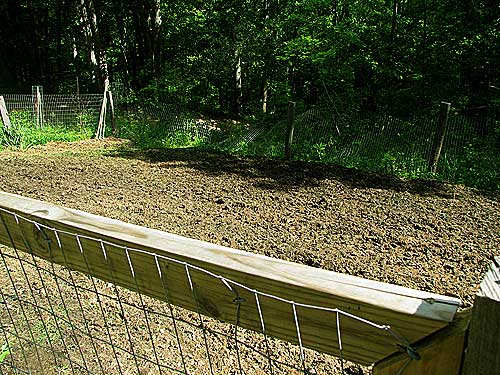
In developing a worthy excuse for being so behind in getting our garden planted, I decided to plant by the moon! Ha! Now I’m just smart, not delinquent. Everyone else around here has been planting for the past two weeks (after the last frost date passed) while we are just now getting started. Now it all makes sense. As there was a new moon yesterday, we did our plowing as we should have (on Thursday then again on Saturday), in the fourth quarter of the moon, and we’re starting to get our plants in the garden this week–during the waxing moon.
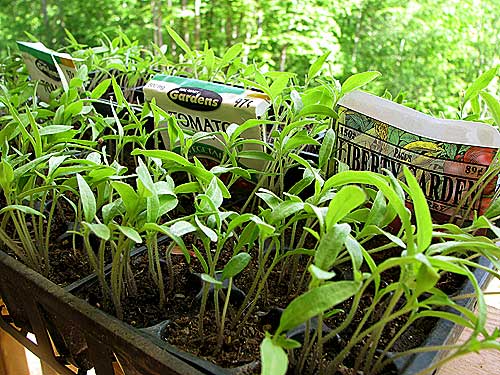
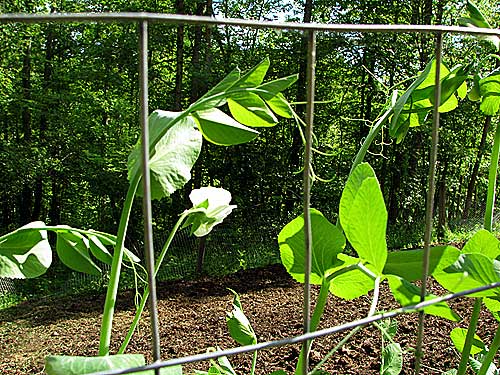
The theory behind planting by the moon is that a waxing moon (new moon to full moon) is the best time to plant annuals (plants that produce fruit/vegetables above ground). During the first quarter of the waxing moon, you should put leafy plants like asparagus, cabbage, celery, endive, and spinach (plants that produce their seeds outside themselves) in the garden. During the second week, do plants that produce seeds inside, like beans, peas, peppers, squash, eggplant, tomatoes, and cucumbers.
A few other things you should do during a waxing moon include taking cuttings, transplanting, picking fruits and vegetables that are intended for immediate consumption, and gathering herbs.
A waning moon (full moon to new moon) is the best time to plant all the bienniels, perennials, bulb, and root crops, particularly during the time between the full moon and the third quarter. (This includes trees and bushes. I’m so excited that we planted a dozen fruit trees about a week and a half ago–perfect timing!) The fourth quarter, leading up to the new moon, is the time to weed and cultivate and plow.
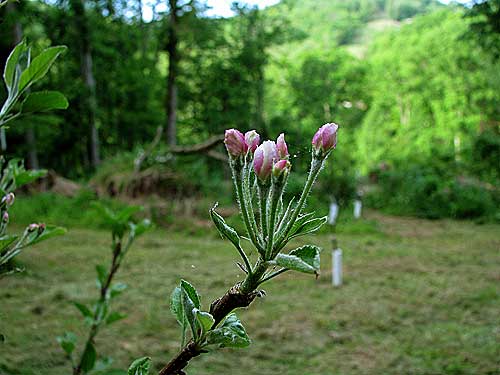
(Blossoms on our newly-planted apple tree. See how happy it is to have been planted in the waning moon?)
Other waning moon gardening chores include dividing perennials, spreading compost, mulching, pruning, and harvesting fruits and vegetables for longterm storage (like apples and potatoes), digging herb roots, and gathering flowers and seeds.
You shouldn’t plant at all on the exact day of the new moon or the full moon, or on the first and last quarter moon days. Those are considered “barren” days.
Planting by the moon is an ancient practice–but did our forebears know something we have forgotten in our world where, in many places, people can’t even see the moonlight for all the streetlights? Does it not make sense that the strength of the light during the various phases of the moon has an effect on plants?
If you want to read my entire list of reasons why I’m so smart to plant this late (aside from following the moon), read my column today in the Charleston Daily Mail!


CindyP says:
Love it!! Teehee! But that is exactly how my dad always figured the planting of the garden… I’ve just never looked at the moon calendar, I’m glad I’m planting when it’s supposed to be planted!
On May 25, 2009 at 4:03 am
4rum says:
I grew up with ‘old timey’ traditions in everything from planting to when to have a tooth pulled. It is so deeply ingrained that I will always go by the almanac if one is available (or I remember to check with google) but I have to wonder … does Del Monte plow in light moon? Does Stokley’s shut down canning corn when the sign is in the bowels? Would Hunt’s ever be able to buy tomatoes if everyone planted with the sign in the blossom? And believe me … if my Momma knew I’d questioned my heritage … she’d spank me with a Ouija board !
:snoopy:
On May 25, 2009 at 4:07 am
shirley says:
😆 That is too funny
On May 25, 2009 at 10:10 am
Diane says:
You are not the only one late in getting in the garden. But we had frost last week? So I was kind of glad I am getting a late start.
I never follow the “rule” of planing anyways. And I usally seem to have some really nice plants for some reason. Must be the moon. lol.
On May 25, 2009 at 4:48 am
Marley Delarose says:
:happyflower: Wonderful info. My first though was that you figured out a way to get more time in your very very busy day.
Martie
On May 25, 2009 at 4:52 am
Marianne Arkins says:
Many moons ago (ha), I did a test and planted seeds… one the day BEFORE a new moon, one the day AFTER, just to see which plant did better, and darn if the one I planted in the right moon cycle didn’t grow better, despite being two days younger. Weird?
Good luck with your garden!
On May 25, 2009 at 5:12 am
Lynda Dunham-Watkins says:
Where did you get your information? I can’t even figure out how to read an almanac! Enjoyed your column also.
On May 25, 2009 at 5:56 am
annied says:
My grandmother and my father and his sisters all planted by the phases of the moon. There was never any question about it and they all had beautiful, bountiful gardens. Sometimes the old ways are the best ways.
On May 25, 2009 at 6:09 am
shirley says:
Suzanne,You don’t need an excuse. Following the signs is a tried and true way of planting and harvesting. The old timers know this.My grandfather was adamant about following the signs and always produced abundant gardens.If you didn’t listen to him, you ended up with vegetable plants that dropped blooms and never produced anything else.Also, if you plant cucumbers, there are certain times a woman has to stay out of the cucumber patch.
Once, when I was a young girl, I walked through our cuke patch (at that time of the month) to prove him wrong and the next day the cukes started dying on the vine.
Some of this stuff sounds crazy, but I’m a believer.
On May 25, 2009 at 7:14 am
ShadowWoods says:
Suzanne, Thanks for explaining planting by the moon so simply. I grew up in a farming family that swore by this practice. The Old Farmer’s Almanac was our planting, growing, gardening and harvesting bible. And yes, it really does work because there is science behind the myth – In brief, the moon’s pull controls the tides and hence, probably influences the movement of fluids in sprouting, budding, rooting plants (e.g. cell growth/expansion which is mostly water, uptake of nutrient-rich water, running of sap, etc.) This is a very basic explanation of what I understand and requires your readers to do more research. Anyway, Happy Planting!
On May 25, 2009 at 8:56 am
mmHoney says:
MY GRANDMOTHER LIVED BY THE PHASE OF THE MOON. EVEN WHEN SHE WOULD HAVE TO GO DELIVER A BABY. IT WORKED FOR HER. CHECK WITH THE NURSING HOMES. THEY WILL TELL YOU HOW IT SEEMS TO AFFECT THEIR PATIENTS….
OH WELL I BELIEVE I WILL TAKE A NAP.
On May 25, 2009 at 9:21 am
Nancy in Atlanta says:
You are going to be so busy cooking, baking, canning and freezing!!!
Loved your column – such great reasons for planting late!
On May 25, 2009 at 10:09 am
KentuckyFarmGirl says:
We also plant by the moon phases and according to the Ramon’s Brownie Calendar. I have learned my lesson about planting when that calendar says “do no planting on these days.”
Great article Suzanne!
On May 25, 2009 at 10:20 am
Claudia W. says:
I need energy like yours!!!
On May 25, 2009 at 10:26 am
Ms E says:
This is wonderful!! I’m always happy to see this ancient practice brought into modern conversation and action. As for any naysayers, a technical explanation relates to the gravatational influence of the moon on the macro/micro levels of water in the earth’s composition.
Do you can by the signs??
On May 25, 2009 at 10:32 am
Suzanne McMinn says:
I haven’t tried that yet (canning by the signs) but it sounds interesting so I might give it a whirl this year!
On May 26, 2009 at 7:17 am
jan 'n' tn says:
Planting and more planting. I knew there had to be a schedule, just couldn’t remember where. DUH, the almanac. Thanks for the info reminder. I’ll go get one today.
The Daily Farm Photo: You introduced us to Annabelle in your 1-26 post. I went back and compared the photos, to recall the sweetness from just four months ago. She has kept that sweet charm for me/us.
Thanks again for sharing your daily life & times.
On May 25, 2009 at 11:17 am
Estella says:
My husband planted our small garden today.
On May 25, 2009 at 1:16 pm
Miss Becky says:
Hi there Suzanne,
Planting asparagus has nothing to do with the moon. It has a story all it’s own. I recommend reading up on this. I discovered that growing asparagus is a trial on it’s own. Can’t give you any advice, but please do research it, as it is not an easy thing to grow and takes more than one year to develop a healthy asparagus bed. Much work. I once wanted to compensate a man who had done some work on my farmhouse and he wanted asparagus planted in return. It was difficult to compensate because it takes awhile to establish a bed. I am a master gardener and was a challenge for me. I love your blog.
On May 25, 2009 at 1:31 pm
Jayme aka The Coop Keeper says:
My gosh, my garden is getting out so late too. I’m going to look into this moon business. My aunt swore by it. Ya just never know!
LOVE YOUR BLOG!
On May 25, 2009 at 9:16 pm
Donna says:
Oh my, that truly is a full time job, in itself, isn’t it??!!!!! I guess if you do it enough years, you remember all the names, times to plant, and things that have to be done, like hoeing, weeding….but that is a full time, laborous job!!!! I don’t know if this ol body could handle all that work! LOL
On May 26, 2009 at 9:04 am
Granny Sue says:
We’ve been lucky this year. A lot of our neighbors are just now planting because of all the rain earlier this month. Since we’re on the ridge, our soil dries fast so we can plant when others can’t. Of course, come summer our soil dries fast too so we usually use a lot of mulch.
Our potatoes and tomatoes are already blooming and we’re picking peas and spinach. Lettuce and radishes were ready at the end of March. We plant by the moon too, but we started in March with the early, frost-tolerant things like potatoes and lettuces, etc, and took a chance in April on the tomatoes. We dodged the frost last week but just barely. I expect to have beans by the end of June if the electric fence, dogs and scary scarecrow keep the varmints out.
On May 26, 2009 at 3:02 pm
Roberta says:
:cowsleep: My husband and I have put a garden in for the past few years and this is the first year we are doing it according to the moon. Everyone down here swears by it. It is working so far. We have alreday harvested our potatoes, onion, and now yellow squash. The corn is up to our waste and the beans are coming along.
On May 28, 2009 at 12:22 pm
Tamm E Hunt says:
Does this apply to plants? i.e. house and garden?
On August 4, 2009 at 1:04 pm
Suzanne says:
Yes, it applies to all plants.
On August 4, 2009 at 1:13 pm
WV Gal says:
Thank goodness for the Brownie Calendar!
On May 4, 2010 at 12:59 am