

Start with a cow.
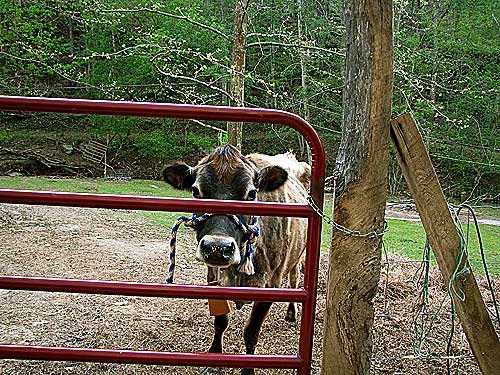
Tie her up, tie her down, tie her sideways. (Shades of Clover.) Okay, a cow is not quite as much trouble to milk as a goat, but cows are quite strong. Get ‘er milked and take your booty home. I have a post specifically about handling milk here: Handling Milk. I’ll brush by some of that information here, but read that post for more details. I’ve had a number of questions about pasteurizing milk, so this post is going to focus on that process.
I bring my milk home in quart jars transferred from my milking bucket after I finish milking Beulah Petunia down in the meadow bottom. (We’re hoping to have her moved closer to the house soon.)
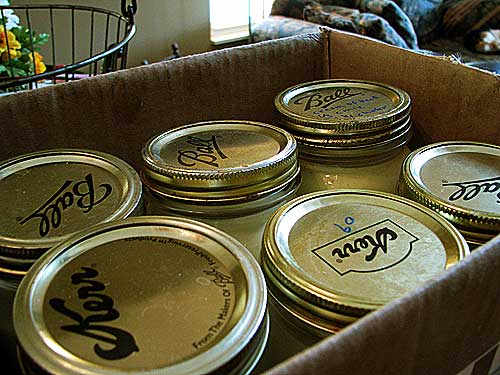
I open all the jars and get ready to filter and measure the milk.
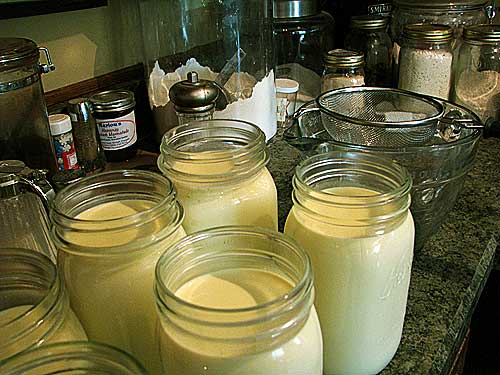
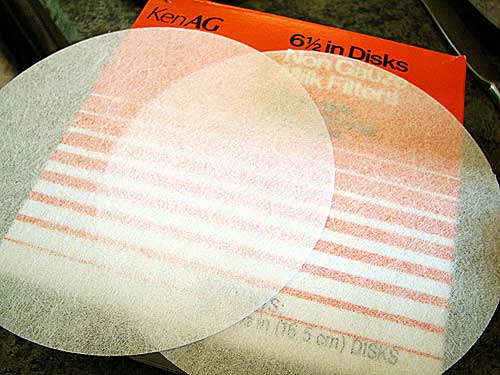
You can buy milk filters made specifically for this purpose at feed or farm supply stores. No doubt back in the day, they used a couple layers of cheesecloth. Or an old shirt. (I’M JUST KIDDING. Maybe.)
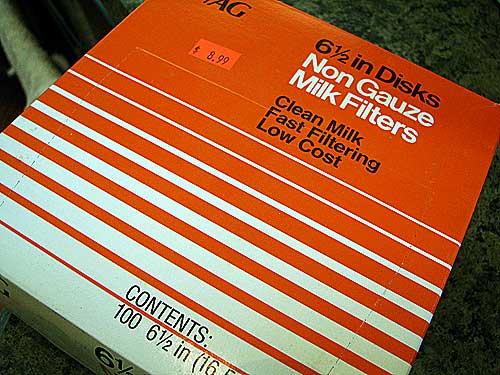
This is what the filters look like.
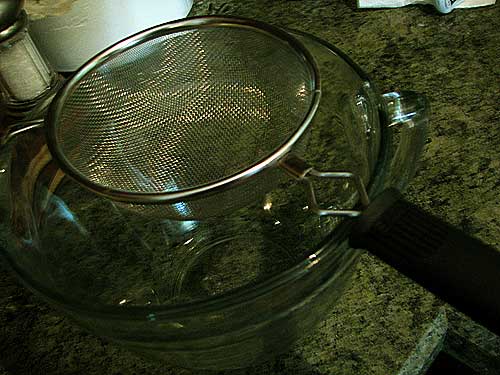
I use a strainer and a two-quart bowl so I’m measuring as I’m filtering. (You don’t have to measure, of course. I just like to keep track.)
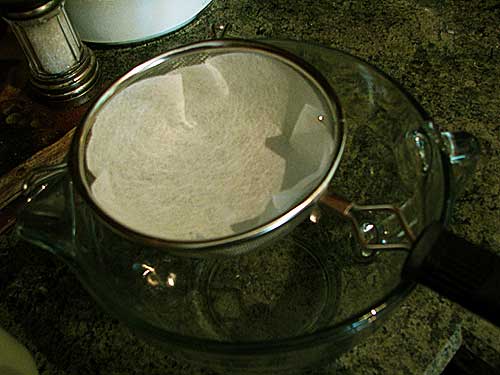
Place a filter in the strainer.
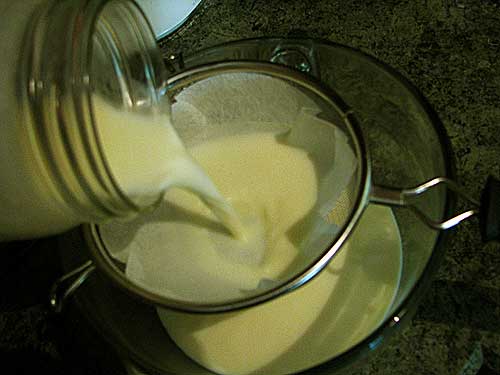
Pour the milk through the filtered strainer into the bowl.
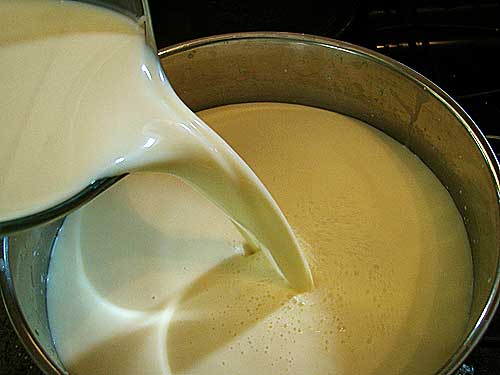
Pour the fresh, clean milk into a big pot.
Stick a thermometer in there.
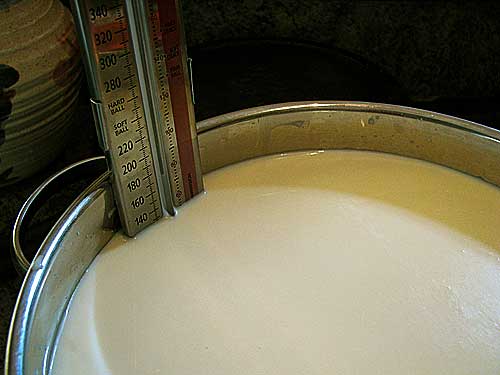
Put the lid on, as you can around the thermometer.
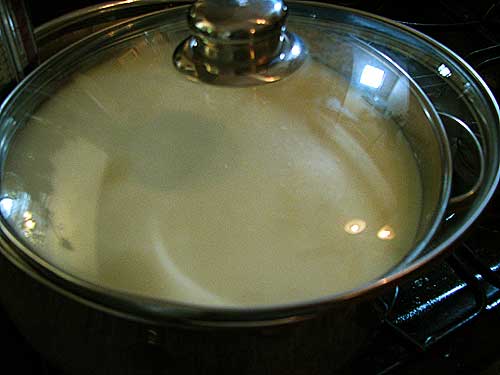
Turn the heat on medium to medium-low. You can pasteurize by different temperatures. You can pasteurize at 145-degrees and hold the milk at that temperature for 30 minutes. Or you can pasteurize at 165-degrees and hold the milk at that temperature for just 15 seconds.
Pasteurization itself is a hot topic. For many people, there is no milk like raw milk. It can be anything from a taste and nutritional decision to a philosophical and nigh on political position. For others, safety is a weighty concern.
Here are a few of the facts.
Pasteurization was developed as a public health measure to save lives. Heating milk to pasteurize destroys pathogenic bacteria. On the other hand, heating milk to pasteurize also makes proteins, vitamins, and milk sugars less available and destroys enzymes. Pasteurization changes the flavor of milk and denatures the whey proteins, resulting in a weaker curd for cheesemaking. (This is why bacterial starters are commonly used in making cheese.) Ultra-pasteurization involves heating the milk to 191-degrees and is a growing practice that allows a longer shelf life. (Avoid buying ultra-pasteurized milk or cream for any of your cheesemaking endeavors.)
The decision to pasteurize or not pasteurize is a personal one, and I’m barely touching the surface here. Only you can decide what is right for you and your family. Consult expert sources for more information. I didn’t pasteurize my goat milk when I was milking Clover. I knew Clover, knew her history, knew where she came from. I just met Beulah Petunia. I don’t know very much about her, her health history, or the people we got her from. At this time, I’m pasteurizing her milk.
While I’m pasteurizing, I attend to other tasks, such as filling the dishwasher from the mess I just made.
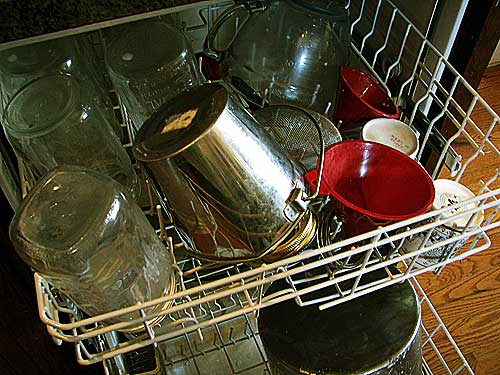
All the jars and bowls, the strainer, my milking pot and other things go straight in the dishwasher to get ready for tomorrow. I’ve got cheese ready to come out the press.
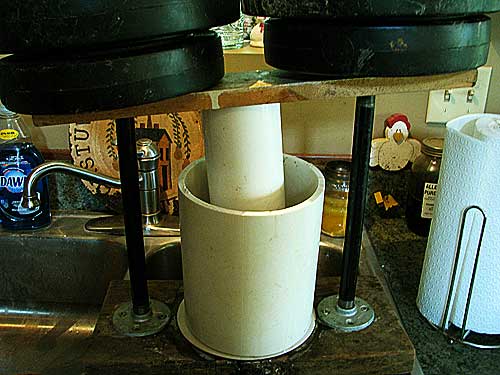
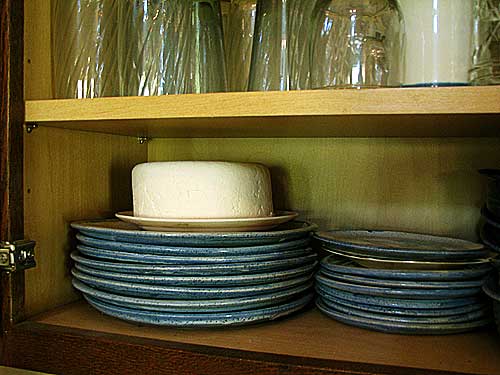
I take it out of the press and set it on a plate inside a cabinet to safely (away from cats!) air dry for a few days before being waxed and aged. It’s a stirred-curd white cheddar, a hard cheese, and will have to age for at least two months.
I take out bowls of milk from the fridge from yesterday’s milking and pasteurizing. Time to take the cream off.
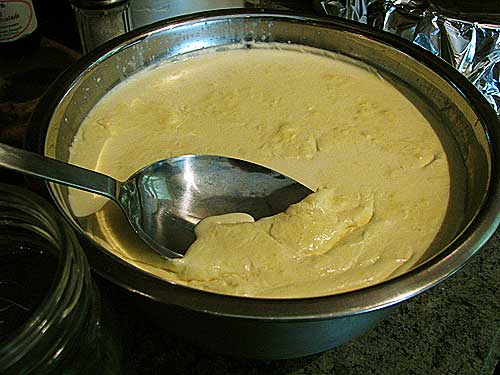
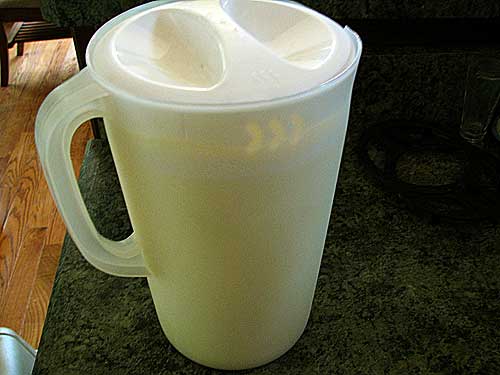
I remove the heavy cream, then the light cream, transferring them to separate containers for later use. Then I pour the milk that remains into pitchers to store for drinking, baking, and cheesemaking.
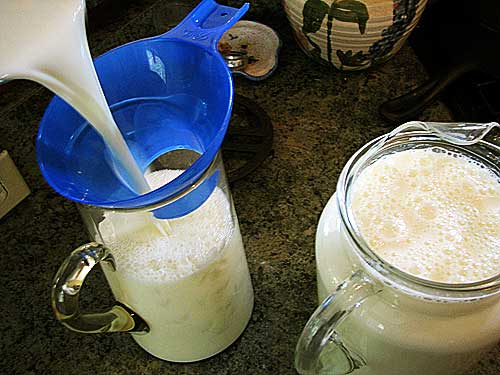
I take out the milk from two days before and think about what I’m going to make with it.
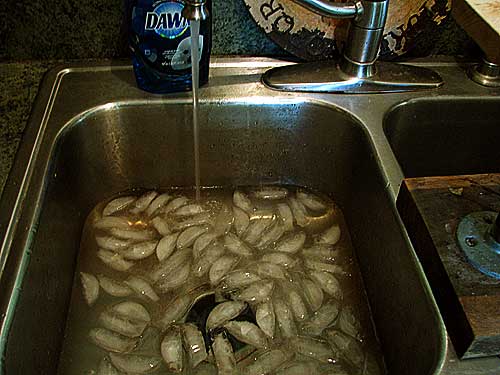
By then, the milk is finished pasteurizing. I plug the sink then run cold water in it and add ice cubes.
Add the pot to the sink to cool the milk down fast.
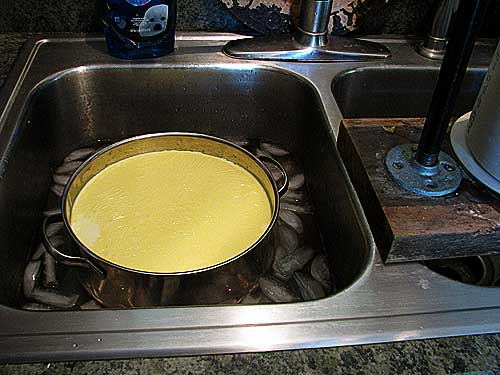
Transfer to bowls after about 20 minutes and place the milk in the refrigerator to continue chilling.
Now go make some cheese or something and go on with your life.

That’s just another morning with Beulah Petunia!
Check out all my cheesemaking posts.


Karen Anne says:
What’s removed by filtering, external to the milk debris? Some component of the milk? What kind of milk is left after the cream is removed, is it like 2%? Thanks.
On April 22, 2010 at 3:36 am
Kelly says:
If the milk is clean and refrigerated there is no need to pasturize. Pasturization kills the healthful microbacteria leaving you with basically a liquid devoid of any healthful organisms. Big business encourages pasturization and legislation. Checke into that. Make sure your dairy is clean and your cows/goats are healthy. After all, humankind didn’t die off from drinking milk. Look how well our society come along with the use of antibiotics and hormones in grain. We now have hospitals teaming with MRSA and VRE. Now that should be killed with pasturization.
On April 22, 2010 at 5:59 am
Jan says:
Very interesting, the whole home pasteurization process. I enjoy how you take processes that seem to be “big industry” and figure them out for a mom and pop (or just mom) kitchen. Very accessible. The picture of the cheese aging is hilarious. Usually it is children sticking things all over the house. At your farm, it is the farmer herself putting things everywhere. I can imagine a house sitter opening a cupboard in the laundry room and not knowing if what she found was soap or cheese!
Keep the “how to’s” coming!!! Makes me want to buy a farm in WV and try, too! Then I couldn’t be Greensboro daily photo and you are already farm daily photo. I guess we’ll stay here!
Jan
GDP
On April 22, 2010 at 6:29 am
carsek says:
A lot of work but if you love it, its not. You do make things seem easy. I love your kitchen.
On April 22, 2010 at 6:41 am
Lori Skoog says:
I am very impressed with the process and all the effort you put into it. The milk looks so rich and delicious. What I would give to taste that cheese!
On April 22, 2010 at 7:17 am
Carol Langille says:
Lots of work to all that but it’s so worth it. Have you made any fresh whipped cream yet? See…that’s what I’d be doing! Lovely, billowy peaks of whipped perfection to dollop on top of your desserts.
Okay, now it’s a little past 6 am and I’m already hungry. Thanks, Suzanne.
On April 22, 2010 at 7:23 am
CindyP says:
It’s like you have another full time job just with Beulah Petunia and all her bounty! Think if you were milk twice a day… :bugeyed:
Can you freeze the milk to use to make cheese later? Oh, some homemade sour cream…have you tried that yet?
On April 22, 2010 at 7:52 am
Tonia says:
Frequent reader here Just don’t post a lot… But I have to defend the goat!!Lol I have been milking goats for about 7 years now.. The worst one on her Worst day doesn’t come near me trying to milk cows last year… They were suppose to broke to milk.. They took 20lbs of feed to get a gallon of milk. All 4 of my goats that were milking took maybe that much while on the stand to get 3 gallons of milk. Her kicks nearly broke my arm and after a month of trying I said forget it! I kicked that cow out of my barn and went back to strictly goat’s milk. We no longer have cows of any sort except the ones in little package that don’t kick anymore..
you know you can have your milk tested to make sure its clean then you wouldn’t have to pasteurize..
Have a blessed day!
On April 22, 2010 at 8:00 am
Charlene says:
I’m so happy for you that you’ve got a cow and are enjoying her bounty. I’d love to be your neighbor and “help” with the excess. lol. Just wondering if you couldn’t use coffee filters in lieu of those expensive milk filters.
On April 22, 2010 at 8:03 am
Linda Goble says:
Me too is wondering why you need to filter the milk? What can come out of her that needs straining? :moo:
On April 22, 2010 at 8:06 am
Suzanne McMinn says:
You have to strain out any debris….. It’s not what comes out of the cow that you’re straining. You’re straining what may have fallen into the bucket along with the milk, such as a stray hair etc.
On April 22, 2010 at 8:11 am
Susan at Charm of the Carolines says:
Suzanne, you never cease to amaze me!!!!
Susan
On April 22, 2010 at 8:25 am
Barbee' says:
That is an interesting post, Suzanne. I am always learning interesting things from you. And, from the commenters. :hug:
On April 22, 2010 at 8:48 am
lavenderblue says:
The other day I mentioned at work that I wanted to live on a farm with goats and cows. Okay, I “mention” it quite a lot; rant about it,actually. One of the young girls that work there made a funny face and said “You’re going to have to buy a pasteurizer.” I said “Oh, I’ll just do what Suzanne tells me to.” And look, here you are, telling me what to do. Awesome.
Of course, they all wanted to know who “Suzanne” was, so I told them about the site. I’ve talked a lot about your blog anyway during my farm rants. I also mentioned you to the window cleaner. She was looking to turn sweet cider into hard in a hurry. I told her maybe a little wine yeast but then I said to check here ’cause you or someone on the forum might already have written about it.
Have we?
On April 22, 2010 at 8:59 am
highlandviewpantry says:
Do you remove the cream before or after pasteurization?
On April 22, 2010 at 9:28 am
Suzanne McMinn says:
You remove the cream after pasteurization because you don’t remove the cream until the milk has been sitting in the fridge at least overnight. You have to wait for the cream to rise.
On April 22, 2010 at 11:23 am
Helen says:
I agree with Kelly. As usual, it is a case of “who benefits?” (from compulsory pasterization) and “follow the money”. For the full story, read “The Untold Story of Milk” by Ron Schmid, ND…forward by Sally Fallon.
On April 22, 2010 at 10:11 am
LauraP says:
That’s how we pasturized when I was a kid, and it’s a great way to get started. Or to just continue with if you don’t mind the tending and stirring — and oh, that stirring is a must if you’re not using a double boiler method. Gotta say, though, I like my 2 gallon pasturizer lots – I bought it my first year with goats as soon as I had the funds. No risk of scorching, no tending and a quicker cool-down than the ice in the sink routine.
Another tip – invest in some gallon jars. They make all the difference in handling efficiency, and there’s no lingering tastes or residue like occasionally occurs with plastic.
On April 22, 2010 at 10:39 am
I Wanna Farm says:
Very timely! I just asked about this yesterday I think. I heard on here somewhere (I think) that you can put a couple of layers of cheesecloth on top of the milking bucket to keep out debris. Tie it on, I guess, or just drape it over. It sounds like it would work.
On April 22, 2010 at 10:44 am
Julie says:
I wanna milk a Cow we have Longhorns but I don’t think any would let me milk them! But I dont want to have do it everyday! Hum I need a nice cow like yours. You must get up at dawn and go to bed in the wee hours of the night to get done everything you do!
On April 22, 2010 at 10:48 am
LauraP says:
Hmm, noticing some critical comments here on pasturization. Here’s the thing about pasturization vs. raw milk. There are very good reasons to pasturize, and there are times when it’s just fine not to. Since Suzanne’s cow is new to her and hasn’t been tested yet for everything pasturization protects against, her decision to pasturize is the right one for her and her family at this time. Doesn’t mean anything more than that, and it’s irresponsible for anyone to suggest otherwise.
Personally, I love raw milk and firmly believe in the health benefits of drinking raw milk from healthy cows. BUT until I’m positive there’s no risk of listeria, brucellosis, tuberculosis and a half dozen other serious illnesses, I pasturize. That means milk from cows new to me gets pasturized until I have test results that make me happy and a sufficient quarantine period has passed. Milk that milked out myself or from a place where I’m not intimately familiar with their routines and am thus completely confident of their sanitary standards — you’d better believe I pasturize. I also pasturize a batch of milk for guests who aren’t accustomed to raw milk or who might have compromised immune systems, just as a precaution because it would be irresponsible of me to not offer them the choice. That’s not giving into scare tactics or big ag bullying. It’s just common sense.
I also pasturize prior to making most of my cheeses because I’m usually aiming for a particular type of cheese, and you don’t get consistent results if you’re not limiting the available bacteria cultures to the ones that are suited to the cheese you want to make. Mystery cheese can be lots of fun, but when I make Derby, I want to end up with something close to Derby.
On April 22, 2010 at 11:12 am
Mariah says:
This is SO interesting! Seems to me even a small farm is TONS of work. Labor of love though, I think!
On April 22, 2010 at 12:48 pm
morningstar says:
Suzanne,
Where did you get your glass 2-quart measuring bowl? I think you mentioned it once before, and I’d love to have something similar if you’ll share your source ~
Thanks for explaining about pasteurizing. It’s always been a mystery to me and now I have at least a basic understanding of the process. Much appreciated ~
On April 22, 2010 at 1:47 pm
Suzanne McMinn says:
morningstar, that 2-quart measuring bowl is fantastic, but it was a gift, so I don’t know where it came from for sure. I think it may have come from the Pampered Chef.
On April 22, 2010 at 2:16 pm
Jill B says:
We have 2 cows and are getting over 5 gallons of milk with only one milking. Looking into getting another calf to raise now. I strain my milk twice just to make myself feel better. My husband does one just after milking and then I do it again when I pour into individual jars. I then place them in the freezer for 30 min. to cool down then place into refrigerator.
Love the milking machine we have only one that we got from someone who retired from milking.
My husbands allergies and heartburn has decreased so much from drinking raw milk it is amazing.
On April 22, 2010 at 2:46 pm
Susan W. says:
It’s not just allergies that improve with the use of raw milk. Have any of you seen a chart showing heart disease/arthritis/cancer increases vs. pasturization? (Or heat treating any oil/fat). Yikes. Pasturation came into widespread usage in this country in the 1920’s – and coronary heart disease was almost unheard of. But that changed quickly. It’s not really about the milk however, it’s about how the heat process is changing the exsisting fatty acids in the milk.
There are a few fassinating books out there about fat and our diets if anyone is interested. I’m not part of the raw food revolution but am getting close. And I have to wonder if there is any “food company” out there that is looking out for consumers. But that’s just my opinion. I envy you the cow. I’d love to try raw milk.
On April 22, 2010 at 4:13 pm
Yvonne M. says:
Suzanne, I don’t know how you do it. You already had so much to do before you got the cow! It wears me out just reading about all that you do. (BTW, you need to marry 52 – if you haven’t already and didn’t tell us!)
On April 22, 2010 at 5:11 pm
MontanaAmanda says:
We use an antique version of this: https://www.homesteadersupply.com/store/index.php?main_page=product_info&cPath=73_164&products_id=1078 to filter our milk-much easier! You can dump it in and be done. We use a big plastic 5 gallon ice cream bucket so it’s easy to measure. And on a bad morning we find all kinds of hairs and hay and who knows what else in the filter… but nothing that we wouldn’t breath in on a windy day. Thing is-milk is a petri dish and you have to look at it that way. I don’t fuss about the “stuff” but I don’t blame those that do.
and I saw where you were thinking of the ice tea pitcher idea for your milk and we found a plastic jug that operated on the same idea (at the dreaded Walmart). We found antique gallon glass milk jugs for $5 each at an antique shop, use a baster to skim cream into other canning jars (easy to do with a narrow necked jar), and then pour the skimmed milk into the plastic spigot jugs to use the milk.
If you cover that pre-skimmed milk with saran wrap or similar it won’t develop that skin. I don’t worry much about the skin but when making butter or “colder” dairy products it gets in the way…even try a lid, ect. Minimize air exposure is the idea.
Milk that has been hand-skimmed is anywhere from 4-6% I believe. IF you shake it. If you let it sit long enough it will be skim or close.
When we first got our cow we pasteurized but when testing was done we stopped. No problems.
I think we have the same stainless steel pan in the ice water! lol that is a familiar sight. I pasteurized ours on a wood cookstove though… took a LONG time! But welcome heat in -20 Montana winter days…
OK Major long reply… sorry about that!
On April 22, 2010 at 8:59 pm
Maureen Child says:
I am so impressed, Suzanne. Seriously. Running this farm is so much work and you get so much pleasure out of it.
But wow, makes you really sit back and admire the pioneer women, doesn’t it??
On April 22, 2010 at 9:47 pm
Amy says:
Suzanne,
Where did you get your glass 2-quart measuring bowl? I think you mentioned it once before, and I’d love to have something similar if you’ll share your source ~
Thanks for explaining about pasteurizing. It’s always been a mystery to me and now I have at least a basic understanding of the process. Much appreciated ~
On April 22, 2010 at 11:23 pm
Suzanne McMinn says:
Amy, the 2-quart measuring bowl was a gift so I’m not positive where it came from, but I think it may have been from the Pampered Chef.
On April 23, 2010 at 6:14 am
Bonita says:
I’m a city girl, hard core urban…but I was surprised to realize I knew exactly what milk filters looked like even before your photo. I used to buy them at the 5 and dime down the block!! Anyone remember milk-filter dolls?
On April 23, 2010 at 3:56 am
pookie says:
Hi Amy and anyonelse who needs to know. Ace Hardware stores sell those Pyrex heavy glass bowls. That’s where I get all my pyrex items. If they don’t have in stock, they will order for you.
Try True Value Hardware stores too if you don’t have Ace. Sometimes Audubon Hardware stores too. Most will order for you.
Grocery stores sometimes sell them (Stop ‘n’ Shop).
On July 10, 2010 at 9:52 am
Linda says:
Hi Suzanne, I noticed you didn’t say which of the two methods you used – 145-degrees and hold the milk at that temperature for 30 minutes or the at 165-degrees and hold the milk at that temperature for just 15 seconds. I take it you use the 30 minute one because you have time to do some chores before it is done. Do you stir the milk once in a awhile? How do you keep it from scotching or sticking to the bottom?
Thanks…
On October 15, 2010 at 3:51 pm
Suzanne McMinn says:
Linda, when I pasteurize (at least now), I use the 165-method. It’s faster and easier. If you’re going to use the milk for cheese, you should definitely do the 145. (The lower you keep the temp while pasteurizing, the better your milk will curd up!) When I pasteurize now, I do it with milk headed for drinking/baking milk and butter and coffee cream and also soft cheeses, etc. I don’t pasteurize milk at all headed for hard cheese.
On October 15, 2010 at 4:24 pm
treehug8 says:
I’m curious – are there benefits to pasteurizing at the different temps? I just used your higher temp/15 second time and it turned out great. Why would you want to wait 30 minutes when you can do it in seconds? Thanks!
On June 29, 2012 at 2:39 pm
Suzanne McMinn says:
The lower temp method is better for cheesemaking purposes.
On June 29, 2012 at 2:41 pm
Kelsey says:
THis is awesome, thank you!!! Two questions:
1. How do you make sure the milk doesn’t burn? I feel like I’ve seen directions inclduing a double boiler, but I don’t have that equipment and would much prefer a single pan, love that it works successfully for you! Let me know if there are any tips or if it’s a false worry to begin with that it could burn.
2. Would it be possible to pastuerize in a crock pot? I’m wondering if that might help it not burn.
Thank you again!
On January 11, 2017 at 2:46 pm
Suzanne McMinn says:
Kelsey, unless you have a crock pot (or instapot) or something where you can set temperature, I think it would be difficult to attain and hold at the correct temperature that way. To do it in a regular pot, without burning, stir! Stir constantly! It would be easier if you had a double boiler, but you can do it without one if you are very attentive to it.
On January 16, 2017 at 12:41 pm